Stretching Is Not Enough: Why Mobility Needs to Be Programmed
Estimated read time: 12–15 minutes

A Quick Stretch Can Help You Feel Better. But That Does Not Mean It Is Fixing Your Mobility.
Most people have done some version of this before.
You finish your workout, grab a mat, sit on the floor, stretch your hamstrings for 20 seconds, pull one arm across your chest, maybe hit a quick quad stretch, and then call it mobility work.
There is nothing wrong with that.
It may help you feel a little looser. It may help you calm down after training. It may give you a few minutes to breathe, relax, and transition out of workout mode.
But here is the important part:
That is not the same thing as creating real mobility change.
The Iron Camp Method, is not anti-stretching. Stretching has value. But we are against pretending that a random 10-minute stretch after a workout is enough to fix tight hips, stiff shoulders, limited rotation, poor squat depth, or movement restrictions that have built up over months or years.
A short cooldown stretch may help you feel better temporarily. But if your goal is to move better, lift better, reduce restriction, improve joint control, and build mobility that actually carries over into training and everyday life, you need more than random stretching.
You need a plan.
That is where programmed stretch and mobility work comes in.
Stretching and Mobility Are Not the Same Thing
One of the biggest myths in fitness is that stretching and mobility are the same thing.
They are related, but they are not identical.
Stretching
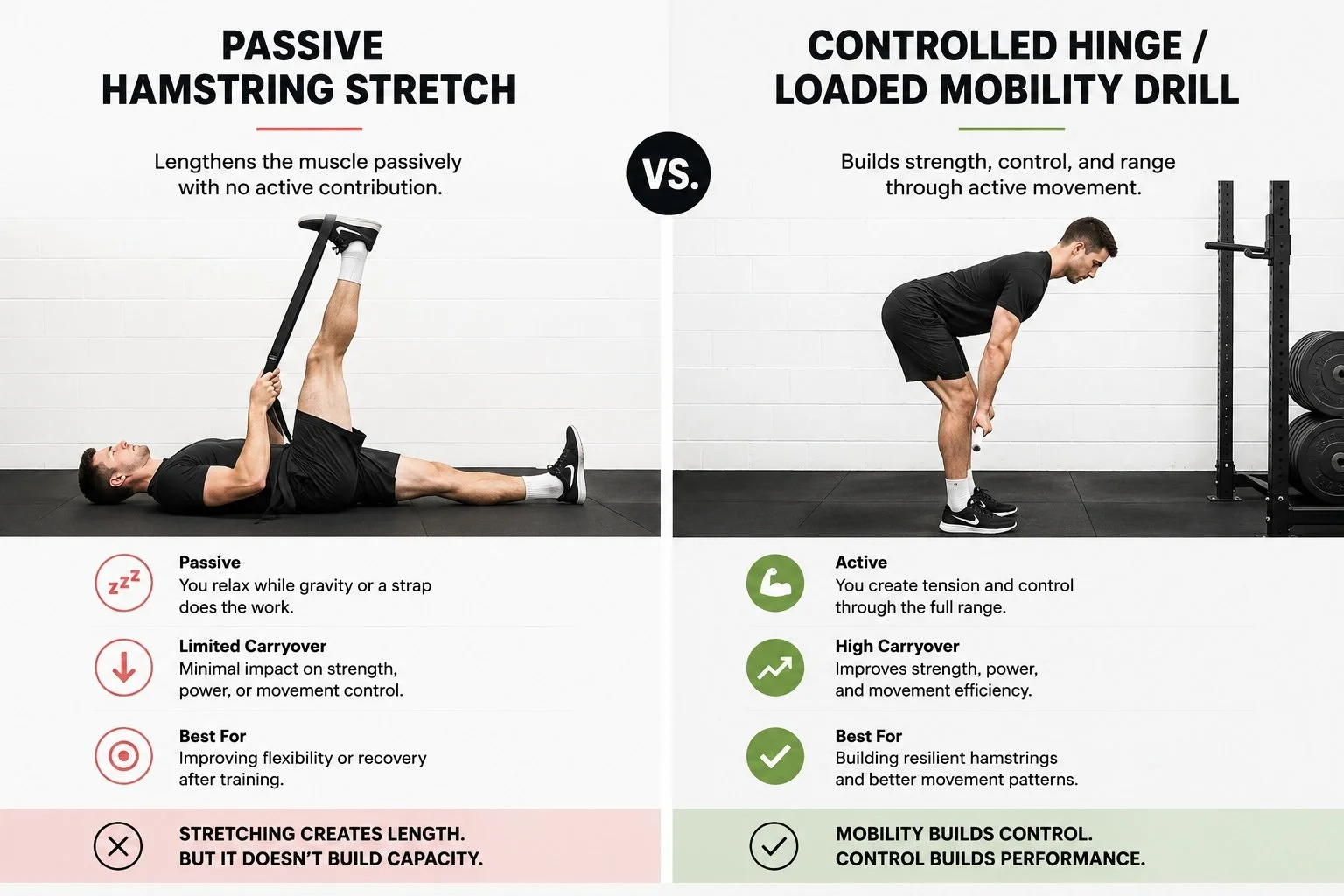
Stretching usually refers to lengthening a muscle or muscle group. It may be passive, where you relax into a position, or active, where you use your own muscles to help hold a position.
Examples include:
Hamstring stretches
Quad stretches
Chest stretches
Hip flexor stretches
Calf stretches
Shoulder stretches
Stretching can be useful. It can help improve range of motion when done consistently over time. Research has shown that stretch training performed frequently over multiple weeks can increase joint range of motion. [1]
But stretching is only one piece of the puzzle.
Flexibility
Flexibility is your ability to access a range of motion.
For example, if you can pull your knee toward your chest, reach your arms overhead, or touch your toes, that is flexibility.
But flexibility does not always mean you can control that range.
Someone may be able to passively access a position but still struggle to use that position during a squat, lunge, deadlift, golf swing, overhead press, or daily movement.
Mobility
Mobility is different.
Mobility is your ability to access, control, and use range of motion.
That means mobility includes:
Joint range of motion
Muscle length
Strength
Stability
Coordination
Control
Breathing
Position awareness
The ability to move under tension
This is why someone can stretch every day and still feel stiff.
They may be improving passive range, but they are not teaching the body how to own that range under load, tension, or movement.
Stretching helps you access a position. Mobility helps you use it.
That distinction matters.
Why a 10-Minute Stretch After Training Is Usually Not Enough
Let’s be clear.
A short stretch after training is not useless.
It can help you feel better in the moment. It can reduce a temporary sense of tightness. It can help you slow your breathing and bring your nervous system down after a hard workout.
But the mistake is assuming that feeling looser for a few minutes means you are creating long-term change.
The research does not strongly support post-exercise stretching as a standalone solution for recovery, soreness, performance, or long-term flexibility. A 2025 systematic review and meta-analysis found that post-exercise stretching, compared with no stretching, did not significantly improve muscle soreness, strength, performance, flexibility, or pain threshold. [2]
That does not mean stretching has no value.
It means we need to stop overselling casual stretching as a complete mobility solution.
A few minutes of random stretching after training is usually missing the things that actually drive long-term improvement:
Enough total volume
Enough frequency
Specificity
Progression
Active control
Strength through range
A clear target
A clear reason for the exercise
Consistency over time
That is the real issue.
It is not that stretching is bad.
It is that most people are asking a quick cooldown stretch to do the job of a real mobility program.
Feeling Loose Is Not the Same as Moving Better
This is where a lot of people get confused.
They stretch and feel better, so they assume they fixed the problem.
But there is a difference between feeling loose and moving better.
Feeling loose is often temporary. You may feel better for a few minutes or a few hours. That can be useful, especially if you are stiff from sitting, stressed, or sore from training.
But moving better means something else.
Moving better means you can:
Squat with better depth and control
Hinge without your low back taking over
Rotate without feeling locked up
Reach overhead without compensation
Lunge without fighting your hips
Press without shoulder discomfort
Train hard without constantly feeling restricted
That does not usually happen from one quick stretch.
It happens when mobility is trained.
The same way strength needs to be trained, mobility needs to be trained.
You would not expect to build a stronger deadlift by doing one random set once per week with no plan. You would not expect to build muscle by doing a few easy reps whenever you feel like it.
Mobility works the same way.
If you want real change, there needs to be intent behind the work.
Real Mobility Change Requires Structure
The Iron Camp Method looks at mobility the same way we look at strength training.
It should be programmed.
That does not mean it needs to be complicated. It does not mean every session has to be intense. It does not mean you need to spend hours stretching every day.
But it does mean your mobility work should have a purpose.
A good mobility plan should consider:
1. What area needs work?
Not everyone needs the same mobility work.
One person may need more hip mobility. Another may need thoracic rotation. Another may need better ankle motion. Another may need shoulder control.
Random stretching treats every body the same.
Programmed mobility looks at what you actually need.
2. Why is that area restricted?
Tightness is not always just a muscle length problem.
Sometimes it is a strength problem. Sometimes it is a control problem. Sometimes it is a position problem. Sometimes it is your body protecting a range it does not trust.
That matters because the solution changes.
If the body does not feel strong or safe in a position, simply stretching harder may not be the answer.
3. How does it affect training or daily life?
Mobility should have carryover.
If your hips feel restricted, how is that showing up?
Is it affecting your squat? Your deadlift? Your golf swing? Your walking? Your ability to get on and off the floor? Your ability to train without discomfort?
The goal is not just to chase flexibility.
The goal is to improve movement.
4. Can you control the range?
This is one of the most important questions.
If you can only access a position passively, but you cannot control it actively, then your body may not trust that range.
That is where active mobility and loaded mobility become important.
5. Is there progression?
Mobility should progress over time.
That may mean more control, more range, better breathing, more load, better positions, or better carryover into strength training.
Without progression, mobility work often turns into the same few stretches repeated forever with very little change.
Why Loaded Mobility Matters
One of the reasons we pair assisted stretching with loaded mobility work is because mobility is not just about getting into a position.
It is about owning that position.
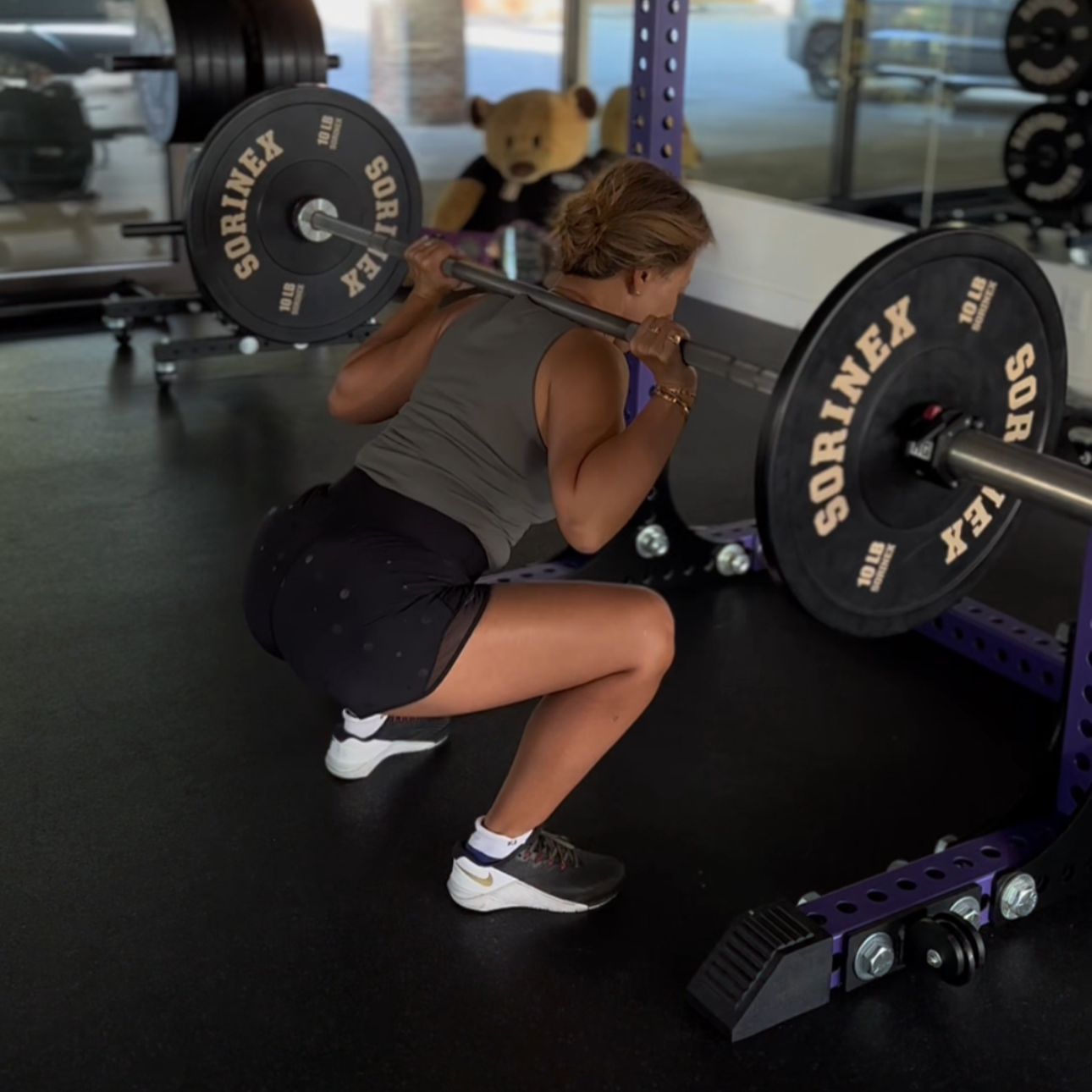
Loaded mobility teaches the body how to create control through range.
That does not mean forcing extreme positions or loading movements aggressively. It means using appropriate exercises, positions, tempo, and resistance to teach the body how to move with more control.
This is where mobility work starts to look more like strength training.
And that is a good thing.
Research supports the idea that strength training can improve range of motion. A 2021 systematic review and meta-analysis found that strength training can be as effective as stretching for improving range of motion. [3] Another systematic review and meta-analysis found that resistance training can improve range of motion compared with inactive controls. [4]
That is important because it challenges another popular myth:
Mobility does not only come from stretching.
Mobility can also be improved by getting stronger through a greater range of motion.
This is why full-range, controlled strength training can be so valuable when programmed correctly.
The Iron Camp Method believes strength and mobility should work together.
Stretching can help open a door.
Loaded mobility helps you walk through it with control.
Assisted Stretching Has Value, But It Should Not Stand Alone
Assisted stretching can be very useful when done properly.
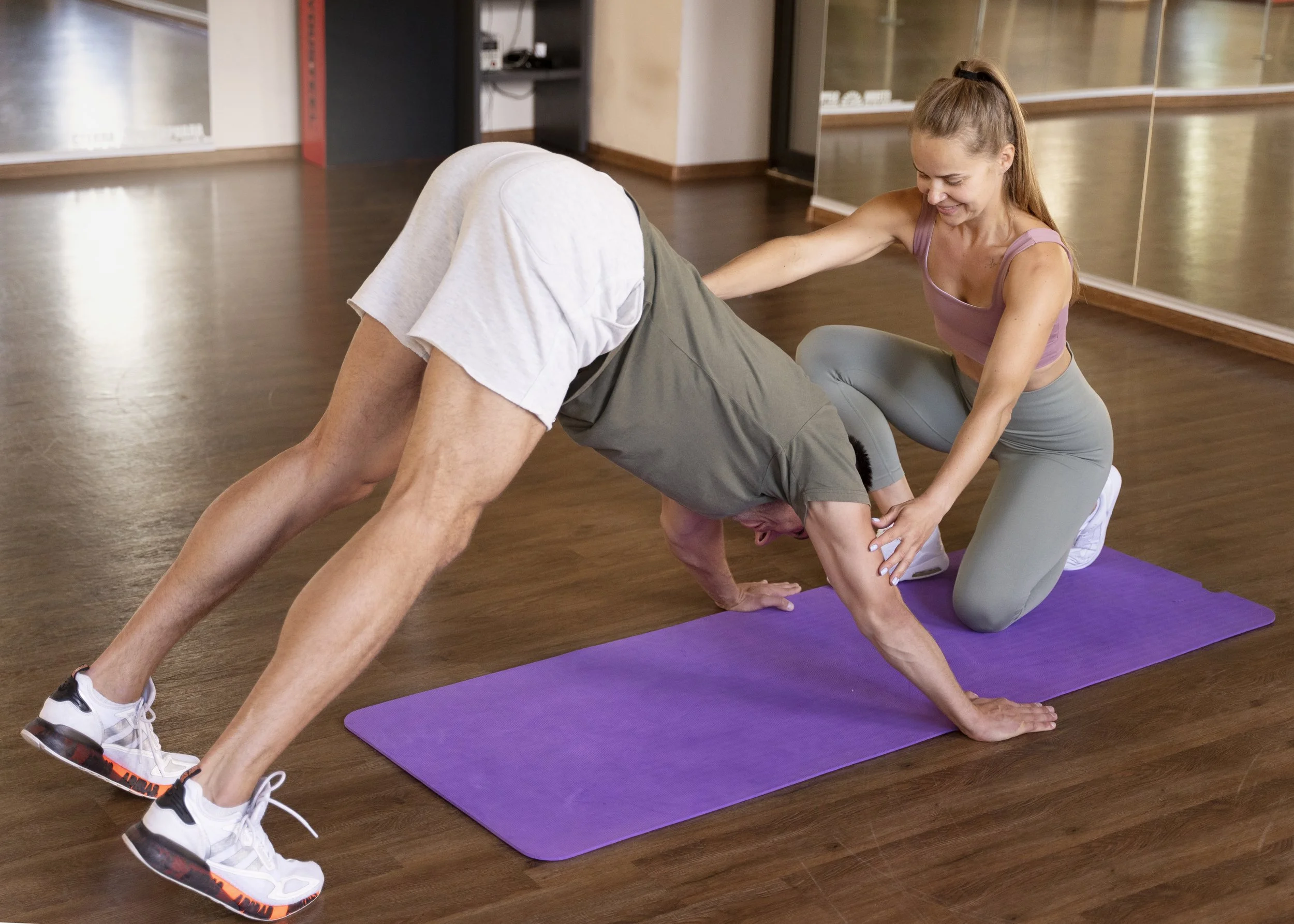
It can help people access positions they have trouble getting into on their own. It can reduce guarding. It can help someone relax into a range of motion. It can create better awareness of where they feel restricted.
It can also be helpful for people who do not know how to stretch effectively, do not feel the right areas when they stretch, or need a coach to guide them into better positions.
But assisted stretching should not be the entire plan.
If someone gets stretched, feels better, then walks out without doing any active work, there may be very little carryover.
That is why the Iron Camp Method pairs assisted stretch with loaded mobility.
The assisted stretch can help create access.
The loaded mobility work helps reinforce control.
The goal is not just to feel loose while someone stretches you.
The goal is to move better after the session ends.
The Problem With Random Stretching
Random stretching usually feels productive because you are doing something.
But doing something is not the same as doing the right thing.
A person with limited hip mobility may keep stretching the same area without ever addressing the strength or control needed to actually use that range.
A person with poor overhead motion may keep stretching their chest but never address the moving pieces that help the shoulder, upper back, and rib cage work together.
A person with low back tightness may stretch their low back repeatedly, when the bigger issue may be hips, breathing, bracing, or poor control during training.
This is why random stretching can become frustrating.
You keep stretching.
You keep feeling tight.
You keep needing to stretch again.
That does not mean you are broken.
It means the strategy may be incomplete.
The body adapts to what you consistently ask it to do. If you only ask it to relax into a stretch, you may get better at relaxing into that stretch. But if you want better movement, you also need to teach the body how to produce and control force in better positions.
That is the bridge between stretching and mobility.
Mobility Should Support Strength Training, Not Replace It
Another myth is that mobility work needs to be separate from strength training.
It does not.
Mobility should support your training.
For most people, the goal is not to become as flexible as possible. The goal is to move well enough to train hard, train safely, and keep making progress.
If your mobility work does not help you squat, hinge, press, rotate, carry, lunge, walk, or perform better in your daily life, then it may not be giving you the carryover you need.
That is why mobility should be connected to your training goals.
For example:
Better hip mobility can support squats, lunges, deadlifts, and athletic movement.
Better thoracic mobility can support rotation, posture, pressing, and pulling.
Better shoulder mobility can support overhead movement, pressing, rows, and daily reaching.
Better ankle mobility can support squats, split squats, walking, and balance.
Better trunk control can support almost every major lift.
Mobility work should not just be something you do because you feel stiff.
It should be part of the larger training system.
Who Benefits From Programmed Stretch and Mobility Work?
The simple answer is:
Almost everyone.
You do not need to be injured, advanced, extremely stiff, or training for a specific sport to benefit from better mobility.
If you train, work, sit, stand, drive, lift, walk, travel, play sports, or just want your body to feel and move better, mobility matters.
Programmed stretch and mobility work can be valuable for anyone who wants to:
Move with less restriction
Improve range of motion
Feel better during workouts
Recover better between training sessions
Improve body awareness
Reduce everyday stiffness
Build better joint control
Support strength training
Improve posture and positioning
Feel more confident moving through larger ranges of motion
The goal is not to turn everyone into a gymnast.
The goal is to help your body move better for the things you already do.
For some people, that means improving squat depth or shoulder position during strength training.
For others, it means reducing stiffness from sitting, driving, working long hours, or spending too much time in the same positions.
For someone else, it may mean improving rotation, moving better during recreational sports, or simply feeling less restricted during everyday life.
That is why mobility work should not be treated like an add-on only for people who are hurt or extremely tight.
Mobility is part of being able to move well.
And the better you move, the better you can train, recover, and function.
With The Iron Camp Method, programmed stretch and mobility work is built for anyone who wants more than a temporary “I feel loose” effect. The goal is to create mobility that carries over into training, daily movement, and long-term progress.
The Difference Between a 30-Minute and 60-Minute Stretch and Mobility Session
We now offer both 30-minute and 60-minute Stretch and Mobility sessions.
Both options combine assisted stretching with mobility work, but they serve slightly different purposes.
30-Minute Stretch and Mobility Session
The 30-minute session is best for targeted work.
This is a good option if you want to focus on a specific area, such as:
Hips
Shoulders
Low back
Ankles
Thoracic spine
A specific movement restriction
A specific issue that is affecting your training
This session is focused, efficient, and built around the area that needs the most attention.
60-Minute Stretch and Mobility Session
The 60-minute session is best for a more complete approach.
This is a good option if you want:
Full-body stretch and mobility work
More time spent on multiple areas
A deeper look at how different restrictions connect
More assisted stretching
More active and loaded mobility
A more complete reset
If the 30-minute session is targeted, the 60-minute session gives us more room to connect the dots.

What Makes the Iron Camp Method Different?
With The Iron Camp Method, Stretch and Mobility sessions are not just passive stretching.
They are coached sessions designed to help you move better.
The session may include:
Assisted stretching
Targeted mobility work
Loaded mobility
Breathing and positional control
Movement assessment
Full-body or area-specific focus
Mobility work that supports strength training
The goal is not to chase flexibility for the sake of flexibility.
The goal is to help your body move with more control, confidence, and strength.
That is the difference.
We are not just trying to make you feel loose for 10 minutes.
We are trying to help you build mobility that carries over.
Common Mobility Myths
Myth 1: “If I Stretch After Every Workout, I Am Doing Mobility Work.”
Not necessarily.
You are stretching, but that does not automatically mean you are improving mobility.
If there is no structure, progression, or carryover, it may just be a cooldown habit.
Again, that can still have value. But it is not the same as programmed mobility training.
Myth 2: “Tight Muscles Always Need More Stretching.”
Sometimes they do.
But sometimes tightness is your body asking for better control, better strength, better positioning, or better programming.
A muscle may feel tight because it is overworked, undertrained, guarding, or compensating.
Stretching may help temporarily, but it may not solve the reason the tightness keeps coming back.
Myth 3: “Mobility Work Should Be Easy and Passive.”
Mobility work can be relaxing, but it is not always passive.
If the goal is to control more range of motion, there needs to be some active work.
That may include controlled movement, isometric holds, loaded positions, slow tempo work, or strength exercises performed through better ranges.
Myth 4: “Strength Training Makes You Tight.”
Poorly programmed strength training can contribute to stiffness if you never train through enough range, never address movement quality, or always load the same patterns.
But strength training itself does not have to make you tight.
In fact, research shows that strength training can improve range of motion when programmed well. [3,4]
The issue is not strength training.
The issue is incomplete training.
Myth 5: “Mobility Only Matters If You Are Injured.”
Mobility is not just rehab.
Mobility supports performance, training quality, longevity, and daily movement.
You do not need to wait until something hurts to work on how you move.
What Proper Mobility Work Can Help Improve
Range of motion
Joint control
Movement quality
Training positions
Recovery between sessions
Body awareness
Breathing and relaxation
Confidence moving through larger ranges
Strength training performance
Long-term movement capacity
The key word is “programmed.”
Mobility work becomes more valuable when it is specific, coached, and connected to your goals.
The Bottom Line
Stretching is not useless.
Random stretching is limited.
A quick stretch after a workout may help you feel better in the short term. It may help you relax, breathe, and feel less stiff.
But if your goal is real mobility change, you need more than a few minutes of casual stretching.
You need structure.
You need consistency.
You need active control.
You need strength through range.
You need a plan.
That is what programmed stretch and mobility work is built to do.
With The Iron Camp Method, we pair assisted stretching with loaded mobility work because we want more than temporary relief.
We want carryover.
We want better movement.
We want mobility that supports strength training, daily life, and long-term progress.
A quick stretch can help you feel better. A programmed mobility session is designed to help you move better.
Ready to Move Better?
Reply with “MOBILITY” and we’ll help you book the right Stretch and Mobility session for your goals.
Move better. Train better. Feel better.
References
Konrad A, Nakamura M, Paternoster FK, Tilp M. Chronic effects of stretching on range of motion with consideration of potential moderating variables: A systematic review with meta-analysis. Journal of Sport and Health Science. The review found that stretch training performed frequently for at least two weeks can chronically increase joint range of motion.
https://pmc.ncbi.nlm.nih.gov/articles/PMC10980866/Zhang P, Chen J, Xing T. Effects of post-exercise stretching versus no stretching on lower limb muscle recovery and performance: A meta-analysis. Frontiers in Physiology. The review concluded that post-exercise stretching, when used as a standalone recovery intervention, did not significantly improve soreness, strength, performance, flexibility, or pain threshold.
https://pmc.ncbi.nlm.nih.gov/articles/PMC12521117/Afonso J, Ramirez-Campillo R, Moscão J, Rocha T, Zacca R, Martins A, et al. Strength Training versus Stretching for Improving Range of Motion: A Systematic Review and Meta-Analysis. Healthcare. This review found that strength training and stretching were not significantly different in their effects on range of motion.
https://pmc.ncbi.nlm.nih.gov/articles/PMC8067745/Alizadeh S, Daneshjoo A, Zahiri A, Anvar SH, Goudini R, Hicks JP, Konrad A, Behm DG. Resistance Training Induces Improvements in Range of Motion: A Systematic Review and Meta-Analysis. Sports Medicine. This review found that chronic resistance training can improve range of motion compared with inactive controls.
https://pubmed.ncbi.nlm.nih.gov/36622555/
