Unpopular Truth: It’s Your Fault You’re Not Seeing Progress in the Gym (and That’s Great News)
Unpopular Truth: It’s Your Fault You’re Not Seeing Progress in the Gym (and That’s Great News)
If you’re not seeing progress in the gym, the uncomfortable answer is usually the right one: it’s not your genetics, your “age,” your schedule, or your metabolism. It’s your process.
Before you get defensive, read that again with the correct tone. This is not an insult. It’s a relief.
Because if the problem is you, that means the solution is also you. You can change it. You can fix it. And yes, we can help with that.
Progress is not complicated, but it is brutally honest. The body adapts to what you repeatedly demand from it. If the demand is random, inconsistent, under-fueled, under-recovered, and half-effort, the adaptation is going to look exactly like that.
This article breaks down the Top 5 things stopping your progress in the gym:
Too much variety
No consistency
Dieting for the wrong goal
Not recovering effectively
Not enough effort
What “Progress” Actually Means
For most people, “progress” means one (or more) of these:
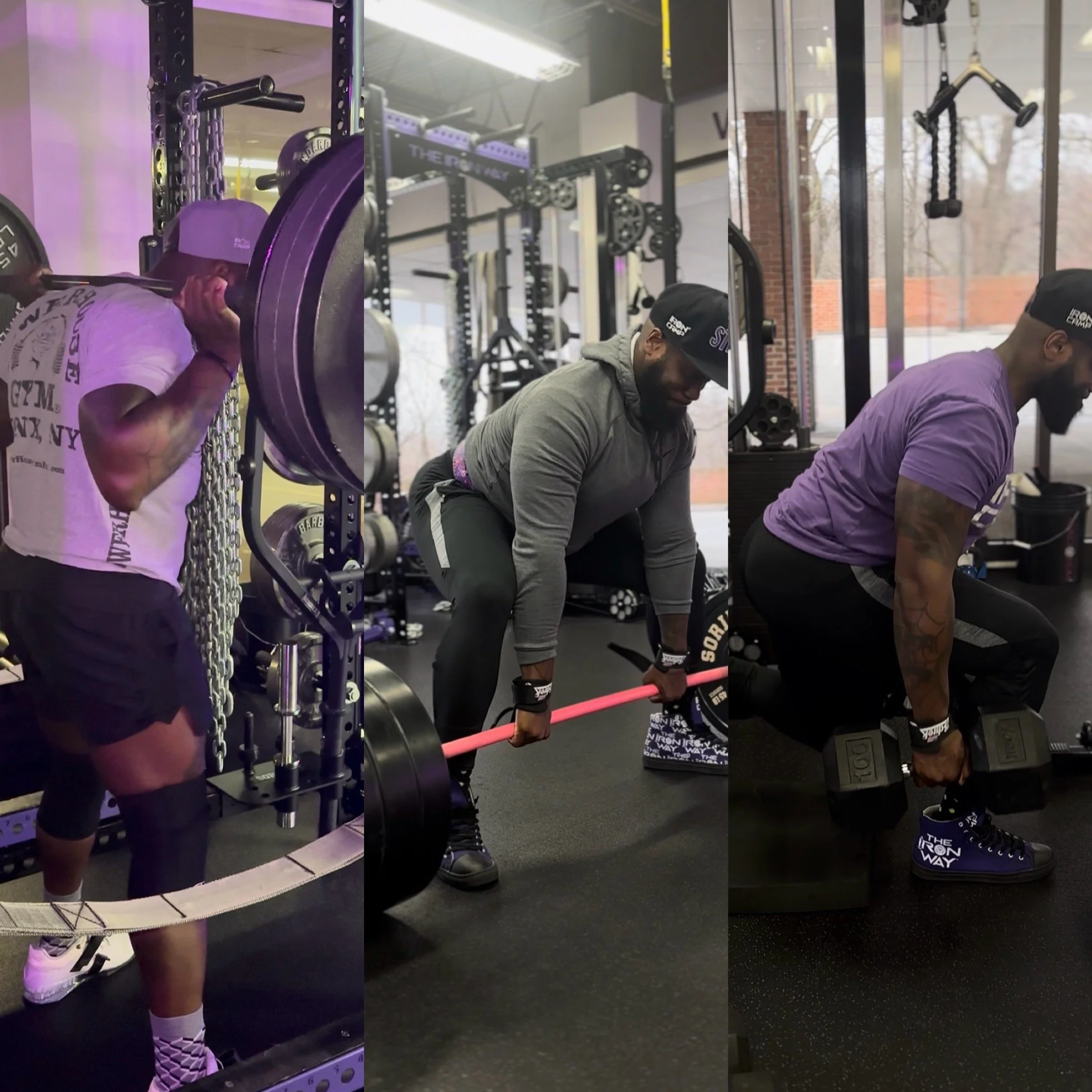
Strength: adding weight, reps, or control to the same lifts over time
Muscle: building visible size and shape (hypertrophy)
Fat loss: getting leaner while maintaining performance
Movement quality: fewer aches, better range of motion, more confidence
Consistency: showing up, training hard, and recovering without crashing
Progress requires a clear signal.
Your body responds to training when the “signal” is strong and repeated. Strength and hypertrophy come from progressive resistance training, appropriate volume, and smart loading strategies over time. (1), (3)
If your training signal changes every week, your nutrition signal changes every day, and your recovery signal is “whatever happens,” your results will always be unpredictable.

1) Too Much Variety
Variety feels productive. It feels like you’re doing “a lot.”
But most lifters use variety as a way to avoid the uncomfortable things that actually work:
repeating the basics
tracking performance
being bad at a movement long enough to get good at it
progressively adding load, reps, or quality
The hidden cost of constant variety
When you change exercises too often, you lose:
skill development
consistent loading
reliable progress markers
the ability to progressively overload
Programs work best when you can measure and repeat output over time. That means your main patterns should stay in place long enough to improve.
Resistance training research supports that structured programming and progression drive strength and hypertrophy outcomes across a wide range of loads and rep schemes. (1), (3)
“But I get bored.”
You do not need to choose between “boring” and “effective.”
You need stable structure with controlled variation.
Structure creates progress
Variation keeps joints happy and the plan enjoyable
Randomness kills results
The Iron Camp rule for variety
Keep your main lifts stable for 4 to 8 weeks, then rotate variations strategically.
Examples:
Squat stays, rotate stance or tempo occasionally
Bench stays, rotate grip width or add pause work
Row stays, rotate angle or implement
Hinge stays, rotate RDL vs trap bar vs deadlift
Planned changes in training variables are a core part of periodization, which is not the same thing as randomly changing exercises every week. (2)
Quick self-check
If you cannot answer these questions, you are probably doing too much variety:
What are your main lifts right now?
What did you do last week?
What are you trying to beat this week?
What will you retest in 6 weeks?
If the answer is “I don’t know,” your training is not a plan. It’s entertainment.

2) No Consistency
You cannot get results from workouts you do not complete.
Consistency beats intensity when intensity is rare.
Most people don’t need a better program. They need a realistic one they can execute week after week.
Consistency is a skill, not a personality trait
Consistency is built through:
clear weekly targets
scheduling
a minimum effective dose plan
removing friction
tracking wins
Resistance training guidelines emphasize frequency and progression based on training status (novice, intermediate, advanced). Building a schedule you can repeat week after week is what makes those guidelines work in real life. (3)
The Iron Camp minimum effective dose
Start with 3 strength sessions per week.
Goal: stack weeks, not win one heroic week.
Simple structure:
Day 1: squat + press + pull + core
Day 2: hinge + press + pull + carry
Day 3: squat or single-leg + press + pull + core
Then earn more volume later.
The “2-in-a-row” rule
Missing one workout is not a failure.
Missing two in a row becomes a pattern.
If you miss Monday, you train Tuesday. No negotiation.
3) Dieting for the Wrong Goal
Many people are accidentally dieting while trying to build muscle, or accidentally overeating while trying to lose fat.
Worse, they change strategies every week based on the scale.
Match the nutrition to the goal
Fat loss requires a calorie deficit
Muscle gain requires enough calories, enough protein, and progressive training
Recomposition requires patience, high protein, consistent lifting, and either maintenance or a modest deficit
Energy balance is real, but weight change is dynamic over time because energy expenditure adapts as body weight changes. (4)
Protein is the non-negotiable
Higher protein intakes support resistance training outcomes and help preserve lean mass, especially during fat loss phases. Large meta-analyses show protein supplementation or higher total protein intake can add small benefits to lean mass and strength outcomes when paired with resistance training, with diminishing returns at higher intakes for many people. (5), (6)
Common mismatch examples
Mismatch 1: “I’m trying to build muscle” but you’re always dieting
low calories
inconsistent protein
low carbs
Result: flat workouts, stalled strength, slower muscle gain.
Mismatch 2: “I’m trying to lose fat” but you’re eating for performance
“healthy” calories add up
liquid calories
weekend blowouts
Result: scale doesn’t move, and you assume your body is broken.
Mismatch 3: “I want to get toned” but you never lift progressively
light weights forever
no plan to add load or reps
Result: no muscle changes, no visible recomposition.
The Iron Camp plate method (simple and effective)
If you don’t want to track macros yet:
1 to 2 palms of protein per meal
1 to 2 fists of carbs around training (adjust by goal)
1 to 2 thumbs of fats per meal
1 to 2 fists of vegetables per meal
Reassess after 14 days.
The weekly diet audit (the thing that fixes most stalls)
If you are not losing fat and you think you are dieting, check:
weekend eating
liquid calories
snacks you “forget” to count
portion creep
inconsistent protein
Because weight change is dynamic and often slower than expected, aggressive expectations can backfire. A plan you can sustain long enough is usually the one that works. (4)

4) Not Recovering Effectively
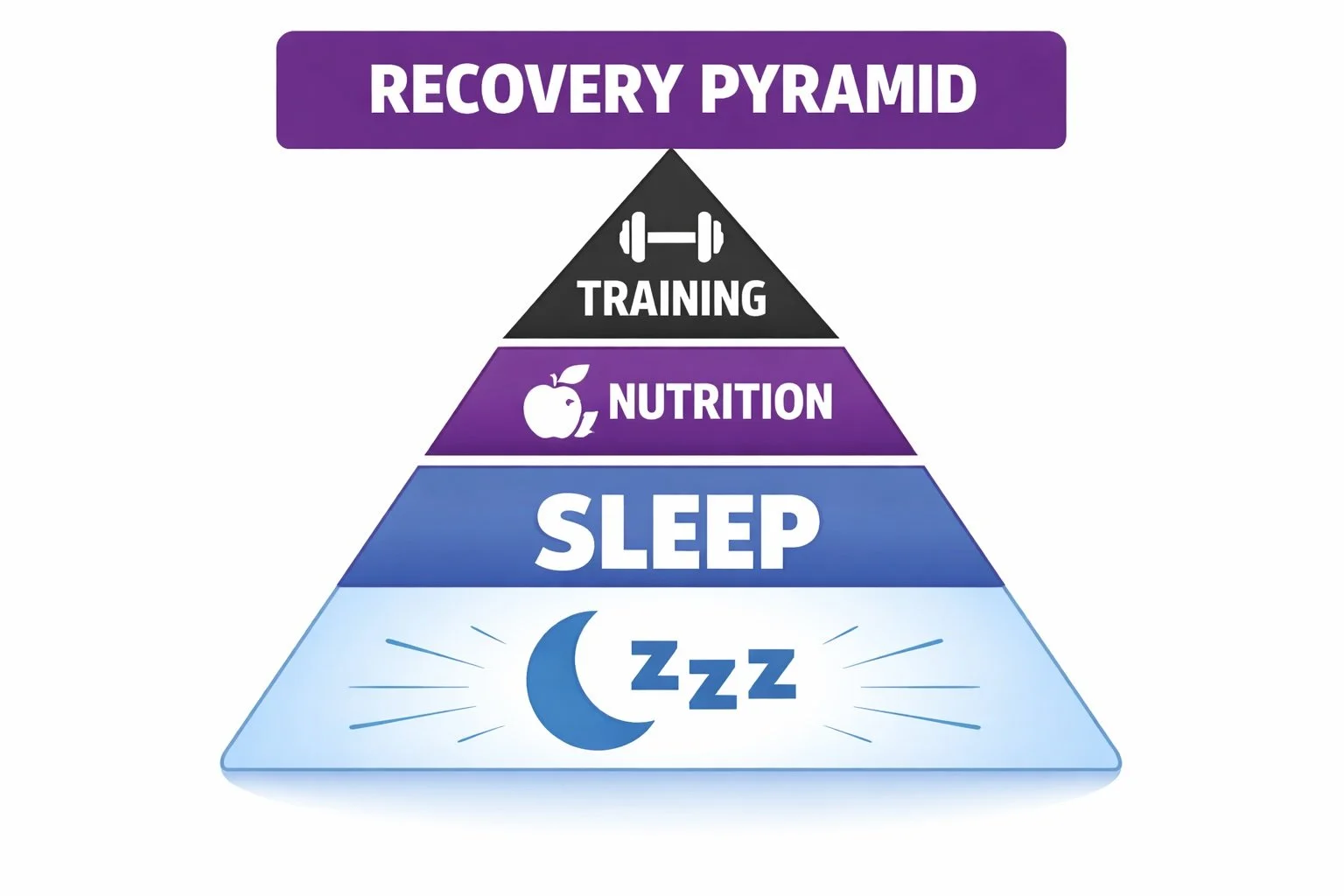
Training is the stimulus. Recovery is where adaptation happens.
Recovery is not just rest days.
What recovery actually includes
sleep duration and quality
total stress load (work, family, life)
nutrition (especially protein and total calories)
hydration
daily movement (steps)
smart programming (volume, intensity, deloads)
Sleep is a performance multiplier (but be specific)
Some sleep strategies, especially sleep extension and naps, can improve performance in athletes and active populations, while basic sleep hygiene interventions alone often show little or no measurable effect in the research. (7)
Training stress can affect sleep and recovery (but it depends)
Resistance training variables (for example, sessions taken to failure vs not) can influence sleep and next-day recovery measures, but the differences are not always large or consistent across protocols. (8)
Signs you’re building recovery debt
you feel weaker week to week
soreness lingers longer than normal
you dread workouts you used to enjoy
sleep quality is poor even when you’re tired
mood and motivation are worse
nagging pain keeps showing up
The Iron Camp recovery checklist
Sleep:
aim for 7 to 9 hours when possible
consistent bedtime and wake time
reduce screens and bright light late
Nutrition:
protein daily
enough total intake to recover
carbs around training if performance matters
Training:
plan hard weeks and easier weeks
don’t chase burnout every session
Stress:
when life stress is high, training stress must be managed
5) Not Enough Effort
Many people train regularly but rarely train hard enough to force adaptation.
Effort does not mean chaos.
Effort means you consistently create a meaningful stimulus.
The biggest effort misunderstanding
People think effort means:
sweating more
doing more exercises
doing more sets
leaving the gym destroyed
That is fatigue chasing.
Real effort is:
clean technique
challenging working sets
progression over time
getting close enough to failure (often) to stimulate adaptation
Failure is not required, but being too easy is a problem
Training to absolute failure is not always necessary for strength or hypertrophy outcomes, and it may not be superior. But if you are consistently far from failure, the stimulus can be too small, especially for hypertrophy. (9), (10)
The Iron Camp standard for “working sets”
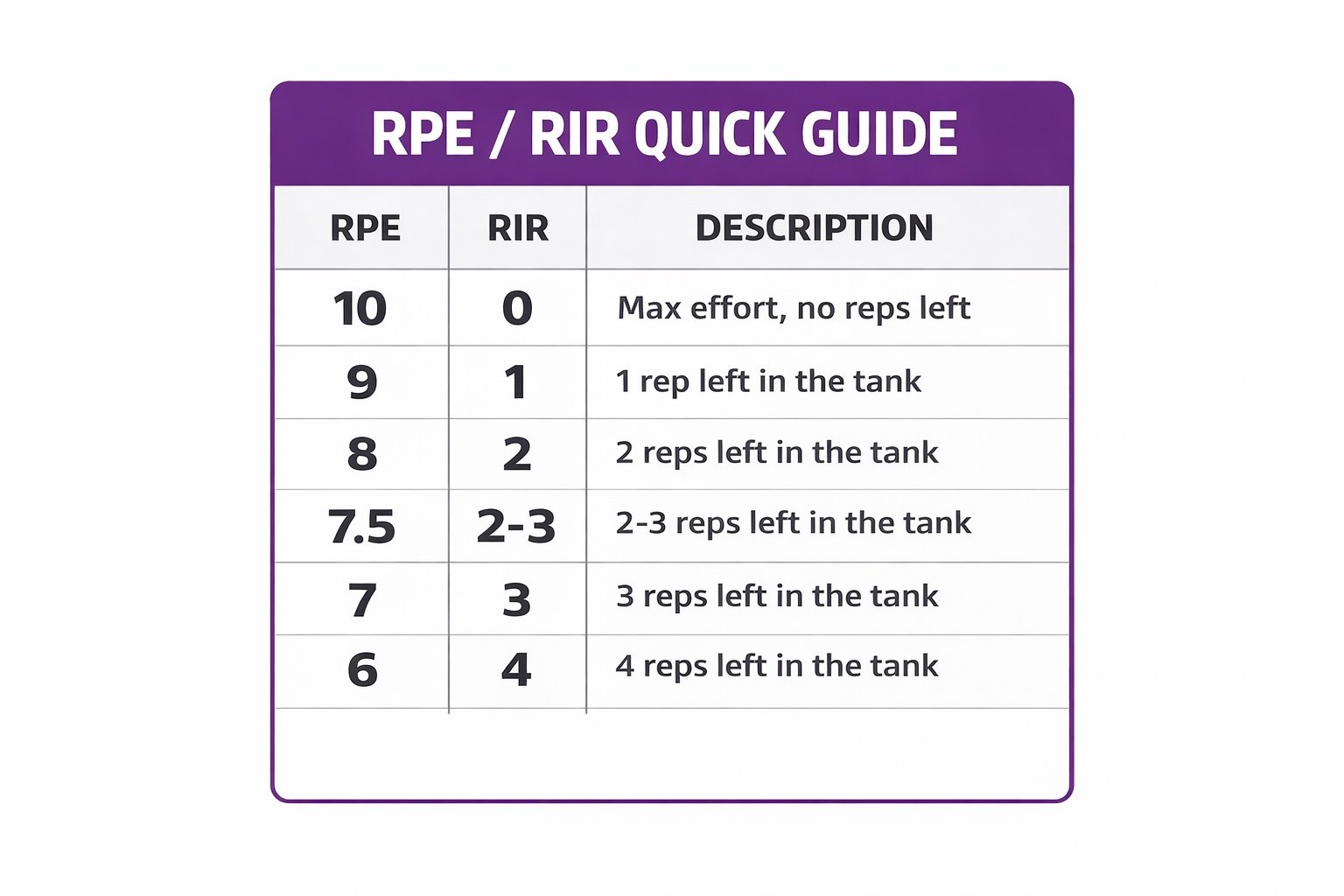
If you finish a set and could do 5+ more reps, it was mostly practice
If you finish with about 1 to 3 reps left, that is usually a solid working set
The reps-in-reserve approach is commonly used to guide effort and intensity in resistance training. (11)
The simplest progression system (that works)
Pick a rep range (example: 6 to 10)
Choose a weight you can do for the low end
Add reps each week until you hit the high end
Add weight and repeat
Not flashy. Very effective.
The Iron Camp Fix: A Simple 4-Week Reset Plan
If you want results, stop chasing hacks and start building a base.
This structure addresses all five problems.
The 4-week rules
Training:
3 days per week
repeat the same main lifts for 4 weeks
track weights and reps
Nutrition:
hit protein daily
choose deficit, maintenance, or a small surplus based on your goal
Recovery:
protect sleep
add a lighter week if you feel run down by week 3 or 4
Effort:
most working sets at 1 to 3 reps in reserve
one weekly “calibration” set on a main lift (stop when form starts to break)
The Real Unpopular Truth (and the Better Ending)
If you’re not seeing progress, you don’t need to hate yourself.
You need to stop lying to yourself.
Most plateaus come from the same five issues:
too much variety
no consistency
nutrition mismatch
poor recovery
low effort
The good news is these are fixable.
If you want help applying this to your schedule, your body, and your goals, that’s what the Iron Camp Method. We take the guesswork out and replace it with a plan you can execute.
References
Currier BS, et al. Resistance training prescription for muscle strength and hypertrophy: a systematic review and Bayesian network meta-analysis. 2023. https://pmc.ncbi.nlm.nih.gov/articles/PMC10579494/
Evans JW, et al. Periodized Resistance Training for Enhancing Skeletal Muscle Hypertrophy and Strength: A Mini-Review. Front Physiol. 2019. https://www.frontiersin.org/articles/10.3389/fphys.2019.00013/full
American College of Sports Medicine. Progression Models in Resistance Training for Healthy Adults. Med Sci Sports Exerc. 2009. PubMed: 19204579. https://pubmed.ncbi.nlm.nih.gov/19204579/
Hall KD, et al. Quantification of the effect of energy imbalance on bodyweight. 2011. https://pmc.ncbi.nlm.nih.gov/articles/PMC3880593/
Morton RW, et al. A systematic review, meta-analysis and meta-regression of the effect of protein supplementation on resistance training-induced gains in muscle mass and strength. Br J Sports Med. 2018. PubMed: 28698222. https://pubmed.ncbi.nlm.nih.gov/28698222/
Nunes EA, et al. Systematic review and meta-analysis of protein intake to support resistance exercise training adaptations. 2022. https://pmc.ncbi.nlm.nih.gov/articles/PMC8978023/
Cunha LA, et al. The Impact of Sleep Interventions on Athletic Performance. 2023. PubMed: 37462808. https://pubmed.ncbi.nlm.nih.gov/37462808/
Ramos-Campo DJ, et al. Effects of resistance training intensity on sleep quality and strength recovery in trained men: randomized cross-over study. Biol Sport. 2021. PubMed: 33795917. https://pubmed.ncbi.nlm.nih.gov/33795917/
Grgic J, et al. Effects of resistance training performed to repetition failure vs non-failure on strength and hypertrophy: a systematic review and meta-analysis. PubMed: 33497853. https://pubmed.ncbi.nlm.nih.gov/33497853/
Refalo MC, et al. Influence of Resistance Training Proximity-to-Failure on Skeletal Muscle Hypertrophy: A Systematic Review. 2022. PubMed: 36334240. https://pubmed.ncbi.nlm.nih.gov/36334240/
Helms ER, et al. Application of the Repetitions in Reserve-Based Rating of Perceived Exertion Scale for Resistance Training. 2016. https://pmc.ncbi.nlm.nih.gov/articles/PMC4961270/
