Why Strength Training Matters More After 40, Not Less
Estimated read time: 8 to 10 minutes
Getting Older Does Not Mean You Need Less Strength
Somewhere along the way, people were sold the idea that getting older means training softer.
They turn 40, 45, 50, or 60, and suddenly the plan becomes: do more cardio, lift lighter weights, avoid anything challenging, and just try to “maintain.”
But here is the truth:
After 40, you do not need less strength.
You need more of it.
Not the reckless pursuit of strength. Not ego-driven training. Not training like recovery, responsibilities, joint history, and life stress do not matter.
You need smarter, structured, progressive training that helps you keep muscle, support your joints, protect your bones, improve your confidence, and keep doing the things you want to do.
After more than 17 years of coaching, one thing I have seen over and over is that people do not fall apart simply because they get older. They fall apart because they stop doing the things that keep them physically capable.
Strength training is one of those things.
It is not just for athletes. It is not just for bodybuilders. It is not just for young people trying to look good.
Strength training is for the parent who wants to keep up with their kids.
It is for the 45-year-old who wants their body back.
It is for the 55-year-old woman who was told lifting weights would make her bulky.
It is for the former athlete who still has competitive fire but needs a smarter plan.
It is for the busy professional who sits too much, feels stiff, and knows their body is not moving the way it used to.
It is for the person who wants to age with options.
The Physical Activity Guidelines for Americans recommend that adults perform muscle-strengthening activities involving all major muscle groups at least two days per week, along with regular aerobic activity [1].
That recommendation is not just about looking fit. It is about health, function, and quality of life.
What Actually Changes After 40?
Turning 40 does not mean your body suddenly breaks.
But the margin for error starts to shrink.
You can still build muscle. You can still get stronger. You can still improve your body composition. You can still move better. You can still feel athletic.
But you usually cannot get away with the same habits you got away with in your 20s and 30s.
Less sleep hits harder.
Poor nutrition shows up faster.
Random workouts stop working.
Long layoffs become more noticeable.
Muscle loss becomes easier.
Injuries linger longer.
Stiffness starts feeling normal if you do not address it.
Age-related muscle loss, often discussed under the broader topic of sarcopenia, is connected to declines in strength, function, balance, and fall risk. Research consistently discusses resistance training as one of the key tools for preserving and improving muscle function as adults age [2].
The Goal Is Not to Train Younger
The goal after 40 is not to pretend you are younger.
The goal is to train in a way that makes you harder to breakdown.
That means you may need better warmups, better exercise selection, more attention to mobility, more recovery between hard sessions, more protein, and less random intensity.
That does not mean you train soft.
It means you train with a plan.
With the Iron Camp Method, this is why strength, mobility, nutrition, and progression matter. Not because everyone needs to train like a powerlifter, but because everyone needs a body that can produce force, absorb stress, and recover from life.
Muscle Is Not Just About Looks
Most people understand muscle from a cosmetic standpoint.
They want better arms, better glutes, better legs, a tighter midsection, a stronger back, or a more athletic shape.
There is nothing wrong with that.
Looking better is a valid goal.
But after 40, muscle becomes much bigger than aesthetics.
Muscle is your physical reserve.
It helps you stand up from the floor. Carry groceries. Climb stairs. Travel. Pick up kids or grandkids. Play golf. Hike. Move furniture. Handle a fall. Recover from injury. Maintain posture. Protect joints. Keep your metabolism more resilient.
Muscle is not just something you flex.
It is something you use.
Research has linked resistance training with lower risk of all-cause mortality, cardiovascular disease mortality, and cancer-specific mortality. One 2022 systematic review and meta-analysis found that resistance training was associated with reduced risk of all-cause, cardiovascular disease, and cancer-specific mortality [3].
Strength Is a Form of Independence
One of the biggest mistakes people make is waiting until they feel weak to start caring about strength.
The problem is, by the time weakness is obvious, you are already playing defense.
You do not want to wait until stairs feel hard.
You do not want to wait until getting off the floor becomes a whole project.
You do not want to wait until your doctor tells you your bone density is dropping.
You do not want to wait until your back hurts every time you pick something up.
You do not want to wait until your confidence is gone.
Strength is easier to maintain and build before the decline becomes a crisis.
That is the real game after 40.
You are not just training for today’s workout.
You are training for the next 10, 20, and 30 years of your life.
The “I’m Too Old to Lift Heavy” Excuse
This is one of the most common things people say.
“I’m too old to lift heavy.”
Usually, what they really mean is:
“I’m afraid of getting hurt.”
That fear is understandable.
But avoiding strength training is not the solution.
The answer is not to avoid load. The answer is to learn how to use load properly.
Heavy is relative.
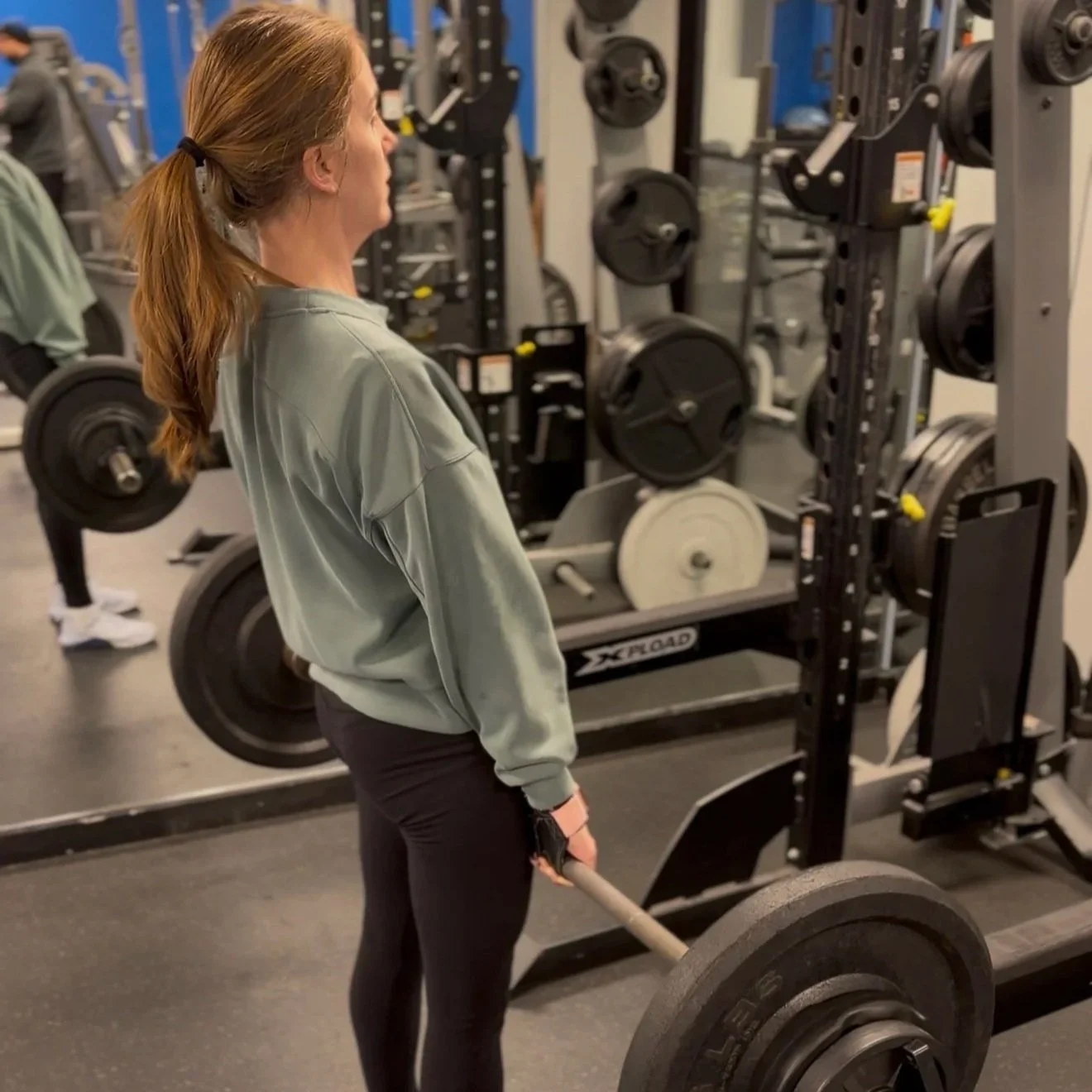
For one person, heavy might be a barbell deadlift.
For another person, heavy might be a goblet squat.
For someone else, heavy might be a leg press, a cable row, or a dumbbell bench press.
Strength training does not require you to max out every week. It does not require you to grind ugly reps. It does not require you to train through pain.
Good strength training after 40 should be challenging, but controlled.
The updated American College of Sports Medicine resistance training position stand emphasizes that adults can improve strength, hypertrophy, power, endurance, and physical function through properly programmed resistance training. It also supports the importance of consistency, individualization, and regular participation over chasing a perfect or overly complicated plan [4].
You Are Not Too Old. You May Be Under-Trained.
A lot of adults are not too old.
They are under-trained.
Their joints are not automatically “bad” because they are 45. Sometimes their joints hurt because their muscles are weak, their movement options are limited, their warmups are poor, and their body has not been exposed to progressive strength work in years.
That does not mean every ache disappears with lifting.
But it does mean the body often feels better when it is stronger, better conditioned, and better prepared.
You do not need to punish your body.
You need to prepare it.
The “I Just Need Cardio” Excuse
Cardio matters.
Walking matters.
Conditioning matters.
Heart health matters.
But cardio alone is not enough.
If your only plan after 40 is to walk, jog, bike, or do cardio classes, you are missing a major piece of the puzzle.
Cardio can help your heart, lungs, endurance, and calorie expenditure.
Strength training helps you preserve and build muscle, improve force production, support bone health, improve joint stability, and maintain the strength needed for daily life.
These are not enemies.
They work together.
The problem is when people use cardio as a replacement for strength training.
It is not.
Federal guidelines recommend both aerobic activity and muscle-strengthening activity because they support different but complementary parts of health and function. Adults are encouraged to get at least 150 to 300 minutes of moderate-intensity aerobic activity per week and perform muscle-strengthening work at least two days per week [1].
Cardio Helps You Live. Strength Helps You Live Better.
You can walk every day and still lose muscle.
You can hit 10,000 steps and still have weak glutes, poor upper body strength, low bone density, and nagging joint pain.
Cardio is not the problem.
The problem is making cardio the whole plan.
After 40, the strongest approach is usually a combination of strength training, walking or conditioning, mobility, and nutrition.
That is how you build a body that looks better, feels better, and performs better.
The “I Don’t Want to Get Bulky” Excuse
This one comes up a lot, especially with women.
“I don’t want to lift too heavy because I don’t want to get bulky.”
The irony is that many women who say this actually want the results that come from lifting.
They want more shape.
They want stronger legs.
They want better glutes.
They want more definition.
They want better posture.
They want their clothes to fit better.
They want to feel confident in their body again.
That requires muscle.
Not excessive muscle. Not bodybuilding-stage muscle. Just enough muscle to create shape, strength, and resilience.
The fear of getting bulky has kept too many women away from the exact training that would help them most.
Women After 40 Need Strength, Not Smaller Goals
For women, strength training becomes especially important through perimenopause, menopause, and postmenopause.
Hormonal changes can influence body composition, fat distribution, bone density, muscle mass, and strength. That does not mean women are doomed after menopause. It means the strategy has to match the season of life.
Strength training is one of the most powerful tools available.
It can help women build or maintain muscle, support bone density, improve confidence, train balance and coordination, and regain a sense of control over their body.
Research on postmenopausal women has shown that resistance training can improve physical fitness, body composition, and strength-related outcomes [5].
This is not about chasing your 25-year-old body.
This is about building a body you are proud to live in now.
Bone Density Matters More Than People Think
Most people do not think about bone density until there is a problem.
That is a mistake.
Bone is living tissue. It responds to stress.
Your bones need a reason to stay strong.
This matters for men and women, but it becomes especially important for women as they age because the risk of bone loss increases after menopause.
Walking is great, but walking alone may not be enough.
Your bones need load.
They need resistance.
They need muscles pulling on them.
They need a reason to adapt.
Properly loaded exercise, including resistance training when programmed appropriately, can help provide that signal. A 2023 systematic review and meta-analysis examined exercise training and bone mineral density in postmenopausal women, including controlled exercise trials lasting at least six months [6].
Stronger Muscles Support Stronger Bones
This is one of the reasons I do not like when adults over 40 are told to only “take it easy.”
Yes, training should be safe.
Yes, it should be appropriate.
Yes, it should respect joint history and fitness level.
But always avoiding load does not make the body more capable.
Appropriate load is how the body adapts.
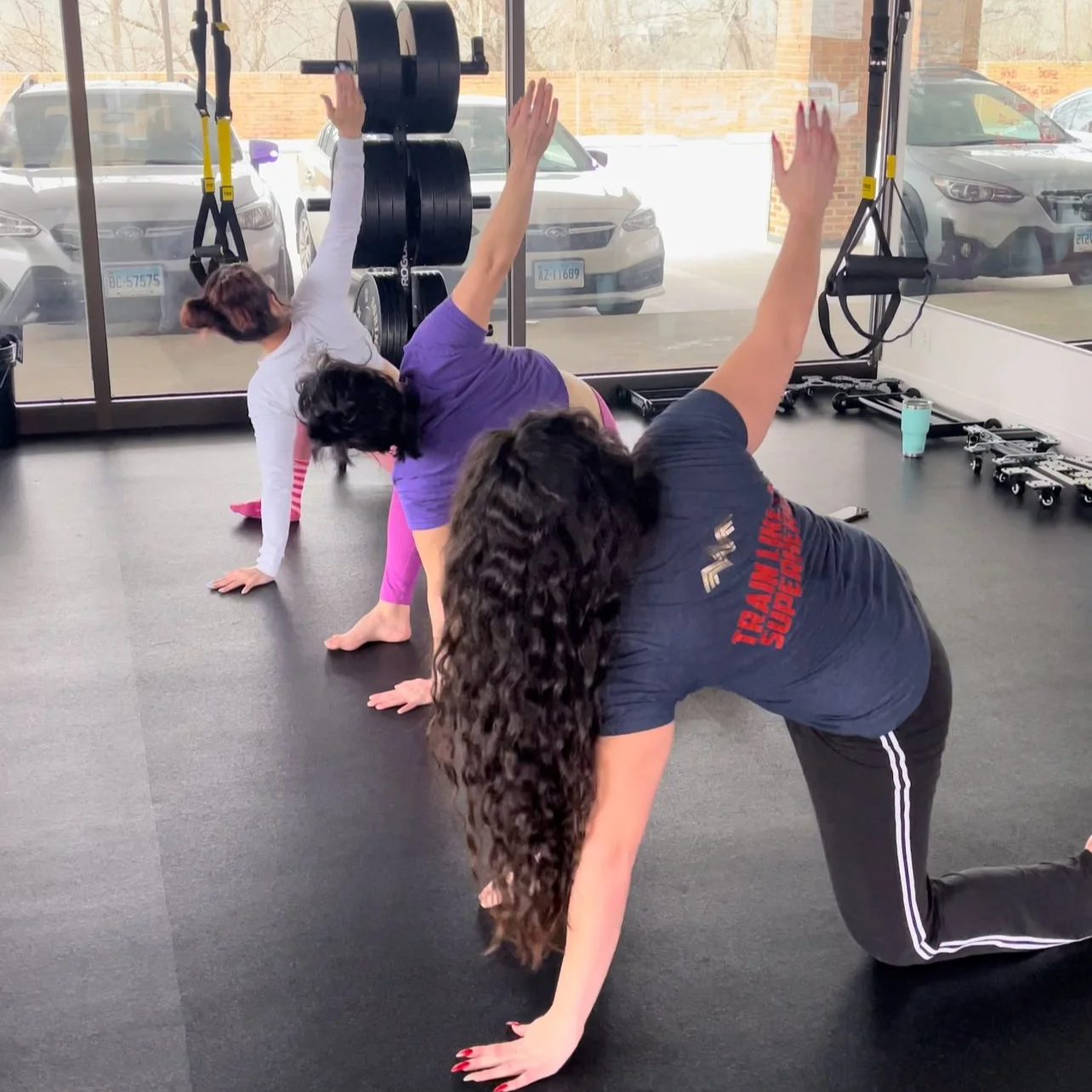
Squats, hinges, presses, rows, carries, lunges, step-ups, sled work, machines, and loaded core work all have a place when programmed well.
The goal is not to beat your body up.
The goal is to give it the right dose of stress so it has a reason to get stronger.
Strength Training Helps Your Metabolism
After 40, a lot of people say their metabolism slowed down.
Sometimes that is true.
But what also happens is this:
They move less.
They lose muscle.
They stop training hard.
They eat inconsistently.
They sleep poorly.
They rely on random workouts.
They spend more time sitting.
Then they blame age for everything.
Age matters, but habits matter too.
Muscle is metabolically active tissue. It is not magic, and building muscle does not mean you can eat whatever you want. But having more muscle supports better body composition, better glucose handling, better training capacity, and better long-term weight management.
Resistance training has been studied for its role in metabolic health, including glycemic control and insulin sensitivity, especially in adults with type 2 diabetes or insulin resistance. One systematic review found resistance training appeared to improve glycemic control and insulin sensitivity in adults with type 2 diabetes, while also noting the evidence should be interpreted with some caution based on review quality [7].
Muscle Gives You More Room to Work With
When you build muscle, you are not just changing how you look.
You are changing what your body can handle.
You can train harder.
You can tolerate more total work.
You can improve how your body uses carbohydrates.
You can maintain a better shape while losing fat.
You can age with more physical reserve.
This is why strength training is such a big part of body recomposition after 40.
Fat loss without strength training often leaves people smaller, softer, weaker, and frustrated.
Fat loss with strength training gives the body a reason to keep muscle while losing fat.
That is a very different outcome.
Grip Strength, Lower Body Strength, and Real-Life Function
Strength is not just something measured in the gym.
It shows up in life.
Grip strength, for example, is often used in research as a practical marker of overall strength and health risk. Large observational research has found lower grip strength is associated with higher all-cause and cardiovascular mortality risk, and dose-response research has also linked lower handgrip strength with higher all-cause, cancer, and cardiovascular mortality risk [8,9].
But I would not stop at grip.
Lower body strength matters.
Upper back strength matters.
Core strength matters.
Hip strength matters.
The ability to brace matters.
The ability to carry matters.
The ability to get up and down matters.
The ability to control your body through space matters.
That is why a good strength program after 40 should not just be a collection of random exercises.
It should build a body that can do things.
Train for the Life You Actually Live
You need strong legs because stairs are not going away.
You need strong hips because your back should not have to do everything.
You need a strong upper back because posture matters.
You need a strong core because your spine needs support.
You need pressing and pulling strength because life is not one-dimensional.
You need mobility because strength without usable range can become limiting.
You need conditioning because strength is better when you can recover.
This is where the Iron Camp Method comes in.
Not as a complicated system for the sake of being complicated, but as a simple idea:
Build strength. Improve mobility. Support it with nutrition. Progress over time.
That is the foundation.
Protein Matters More As You Age
Strength training is the stimulus.
Nutrition supports the adaptation.
If you are over 40 and trying to build muscle, lose fat, improve recovery, or maintain strength, protein matters.
A lot of adults under-eat protein, especially at breakfast and lunch. Then they wonder why they are always sore, always hungry, and not seeing the changes they want.
Protein supports muscle repair, muscle protein synthesis, satiety, and lean mass retention.
As adults move deeper into midlife and older adulthood, protein becomes more important for preserving muscle and supporting training recovery. Research focused on older adults, especially 65+, often recommends protein intakes above the basic adult RDA, commonly around 1.0 to 1.2 grams per kilogram of body weight per day, with higher ranges discussed for active adults or those dealing with illness, injury, or muscle loss [10,11].
You Cannot Out-Train Poor Recovery
People want the workout plan.
They want the exercises.
They want the perfect split.
But they ignore the things that allow the plan to work.
Recovery includes eating enough protein, sleeping enough, managing stress, hydrating, training with appropriate volume, taking rest days seriously, and not turning every workout into a max effort test.
After 40, recovery is part of the program.
That does not mean you train less seriously.
It means you train more intelligently.
What Strength Training After 40 Should Look Like
Strength training after 40 does not need to be complicated.
But it should be structured.
Two to Four Strength Days Per Week
Most adults can benefit from two to four weekly strength sessions depending on their goals, schedule, recovery, and training history.
Beginners may start with two days.
Busy adults may do well with three.
More experienced lifters may prefer four.
The key is consistency.
Full-Body or Upper/Lower Training
For many adults over 40, full-body training works extremely well.
It allows you to train major movement patterns multiple times per week without needing marathon sessions.
Upper/lower splits can also work well, especially for people who train three to four times per week.
The split matters less than the execution.
Progressive Overload
You need some form of progression.
That could mean more weight, more reps, more sets, better control, better range of motion, shorter rest periods, or better technique.
Random workouts may make you sweat.
Progression makes you better.
Joint-Friendly Exercise Selection
Not everyone needs the same exercises.
Some people thrive with barbell squats.
Some need trap bar deadlifts.
Some need machines.
Some need dumbbells.
Some need cables.
Some need more unilateral work.
The right exercise is the one that lets you train the target muscles hard, safely, and consistently.
Strength Plus Muscle-Building Work
After 40, you should train for both strength and muscle.
That means some heavier work in lower rep ranges and some moderate to higher-rep work for muscle-building volume.
You do not need to max out all the time.
You need enough intensity and enough volume to create adaptation.
Mobility and Core Work
Core training should not just be crunches.
You need bracing, anti-rotation, anti-extension, carries, breathing control, and trunk stability.
Your core is not just for abs.
It is your force transfer system.
Mobility matters too. A good warmup should help you access better positions, move with more control, and prepare your body for the work ahead.
What Not to Do After 40
A lot of adults make the same mistakes.
They do random workouts.
They change exercises every session.
They avoid strength because they are scared.
They only do cardio.
They chase soreness.
They eat too little protein.
They go too hard for two weeks, then disappear for two months.
They copy workouts from people half their age.
They train around pain forever instead of solving the problem.
They confuse sweating with progress.
They confuse being exhausted with being coached.
That is not a plan.
That is fitness BS.
The Body Responds to Consistency
You do not need a perfect program.
You need a repeatable one.
You need exercises you can progress.
You need enough structure to know if you are improving.
You need enough flexibility to adjust when life happens.
You need coaching if you do not know how to do that on your own.
That is where the right system matters.
The Bottom Line
Strength matters after 40 because life does not get easier on a weaker body.
You still need to carry things.
You still need to move well.
You still need muscle.
You still need strong bones.
You still need balance.
You still need confidence.
You still need the ability to get off the floor, climb stairs, play with your kids, travel, train, work, and live without feeling like your body is holding you hostage.
Strength training is not about refusing to age.
It is about aging with more control.
It is about choosing capability.
It is about building a body that gives you options.
After 40, the goal is not to do less.
The goal is to train smarter, recover better, eat with purpose, and stay consistent long enough for your body to change.
Weakness may be common.
But it does not have to be your default.
Ready to Build Strength the Right Way?
If you are tired of random workouts, nagging aches, inconsistent progress, or feeling like your body is moving in the wrong direction, Iron Camp can help.
Whether you train in person, online, or through the Iron Camp app, the goal is the same:
Build strength. Improve mobility. Support your nutrition. Train with a plan.
The Iron Camp Method is built for real people with real lives who still want real results.
If you are local, ask about in-person coaching and semi-private training.
If you need guidance from anywhere, ask about remote coaching.
If you want structured training inside the app, explore the Iron Camp membership options.
Your body does not need less strength.
It needs more strength the right way.
References
U.S. Department of Health and Human Services. Physical Activity Guidelines for Americans, 2nd Edition. Adults are advised to perform muscle-strengthening activities involving all major muscle groups at least two days per week, along with regular aerobic activity.
URL: https://odphp.health.gov/sites/default/files/2019-09/Physical_Activity_Guidelines_2nd_edition.pdfRodrigues, F., Domingos, C., Monteiro, D., & Morouço, P. A Review on Aging, Sarcopenia, Falls, and Resistance Training in Community-Dwelling Older Adults. International Journal of Environmental Research and Public Health. 2022. This review discusses aging, sarcopenia, falls, and practical resistance training considerations.
URL: https://pmc.ncbi.nlm.nih.gov/articles/PMC8775372/Shailendra, P., Baldock, K. L., Li, L. S. K., Bennie, J. A., & Boyle, T. Resistance Training and Mortality Risk: A Systematic Review and Meta-Analysis. American Journal of Preventive Medicine. 2022. Resistance training was associated with reduced risk of all-cause, cardiovascular disease, and cancer-specific mortality.
URL: https://pubmed.ncbi.nlm.nih.gov/35599175/American College of Sports Medicine. ACSM Publishes Updated Resistance Training Guidelines. 2026. ACSM summarizes the updated resistance training position stand, emphasizing consistency, individualization, and regular participation.
URL: https://acsm.org/resistance-training-guidelines-update-2026/Currier, B. S., Phillips, S. M., D’Souza, A. C., Fiatarone Singh, M. A., Lowisz, C. V., Rawson, E. S., et al. American College of Sports Medicine Position Stand: Resistance Training Prescription for Muscle Function, Hypertrophy, and Physical Performance in Healthy Adults: An Overview of Reviews. Medicine & Science in Sports & Exercise. 2026.
URL: https://pubmed.ncbi.nlm.nih.gov/41843416/González-Gálvez, N., et al. Resistance Training Effects on Healthy Postmenopausal Women: Systematic Review With Meta-Analysis. Menopause. 2024. This review evaluated the effects of resistance training on physical fitness, physiological variables, and body composition in postmenopausal women.
URL: https://pubmed.ncbi.nlm.nih.gov/38353251/Mohebbi, R., et al. Exercise Training and Bone Mineral Density in Postmenopausal Women: An Updated Systematic Review and Meta-Analysis of Intervention Studies With Emphasis on Potential Moderators. Osteoporosis International. 2023. This review examined exercise effects on bone mineral density in postmenopausal women using controlled exercise trials lasting at least six months.
URL: https://pubmed.ncbi.nlm.nih.gov/36749350/Gordon, B. A., Benson, A. C., Bird, S. R., & Fraser, S. F. Resistance Training Improves Metabolic Health in Type 2 Diabetes: A Systematic Review. Diabetes Research and Clinical Practice. 2009. This review examined resistance training effects on glycemic control and insulin sensitivity in adults with type 2 diabetes.
URL: https://pubmed.ncbi.nlm.nih.gov/19135754/Leong, D. P., Teo, K. K., Rangarajan, S., et al. Prognostic Value of Grip Strength: Findings From the Prospective Urban Rural Epidemiology Study. The Lancet. 2015. Grip strength was associated with all-cause and cardiovascular mortality risk.
URL: https://pubmed.ncbi.nlm.nih.gov/25982160/López-Bueno, R., Andersen, L. L., et al. Thresholds of Handgrip Strength for All-Cause, Cancer, and Cardiovascular Mortality: A Systematic Review With Dose-Response Meta-Analysis. Ageing Research Reviews. 2022. Lower handgrip strength was associated with higher all-cause, cancer, and cardiovascular mortality risk.
URL: https://pubmed.ncbi.nlm.nih.gov/36332759/Nowson, C., & O’Connell, S. Protein Requirements and Recommendations for Older People: A Review. Nutrients. 2015. This review discusses higher protein needs in older adults, particularly when physical activity or resistance training is included.
URL: https://pmc.ncbi.nlm.nih.gov/articles/PMC4555150/Bauer, J., Biolo, G., Cederholm, T., et al. Evidence-Based Recommendations for Optimal Dietary Protein Intake in Older People: A Position Paper From the PROT-AGE Study Group. Journal of the American Medical Directors Association. 2013. The PROT-AGE group recommends higher protein intakes for many older adults than the basic adult RDA.
URL: https://pubmed.ncbi.nlm.nih.gov/23867520/
