How to Eat More and Still Lose Fat
The Hidden Calorie Leaks That Stall Progress (and How to Fix Them)
If you’ve ever said, “I don’t get it. I’m eating healthy and I’m still not leaning out,” this post is for you.
Most people don’t need a more aggressive diet. They need fewer blind spots.
Because fat loss is not just about what you intend to eat. It’s about what you consistently absorb, swallow, sip, pour, nibble, taste, and “kind of count.” Those little things add up fast.
Here’s the good news: you can often lose fat while eating more food (more volume, more satisfaction, more protein, more fiber) once you identify the hidden calorie leaks and fix the handful that apply to you.
This is an Iron Camp Method approach:
Keep it practical
Measure what matters
Eat like an adult, not a monk
Build a plan you can repeat
The Core Idea
“Eat more” can mean three different things
When people hear “eat more,” they assume it means eating more calories. That’s not what we mean.
You can “eat more” in three fat-loss-friendly ways:
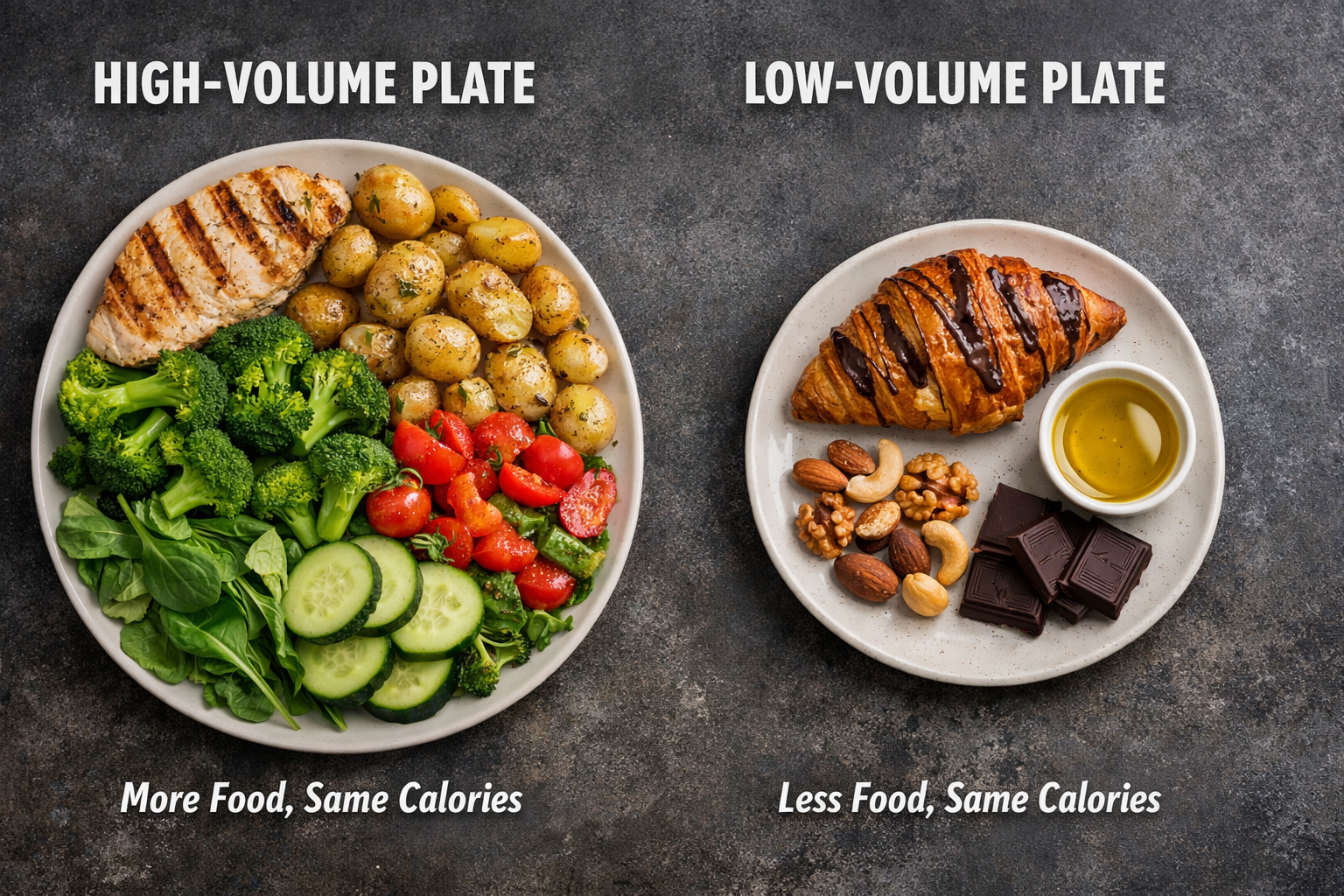
1) More food volume (bigger portions by weight)
You can eat larger meals if you build them around low energy density foods like lean proteins, fruits, potatoes, vegetables, and soups. Studies and longer-term trials show reductions in dietary energy density are associated with better weight loss outcomes and adherence. [5,6]
2) More protein (more satisfaction, better dieting outcomes)
Higher-protein diets often improve satiety and help preserve lean mass during weight loss. Protein also has a higher thermic effect than carbohydrate and fat, meaning slightly more energy is used processing it. [7,8]
3) More structure (fewer decisions, fewer “oops calories”)
Most fat loss stalls aren’t caused by one big issue. They’re caused by five small ones happening daily.
Why Hidden Calories Hit Harder Than You Think
Humans are bad at estimating intake (even with good intentions)
This isn’t a character flaw. It’s normal.
Self-reported food intake is consistently inaccurate when compared to gold-standard methods like doubly labeled water. Most people underreport intake, especially when they’re “trying to be good.” [11,12]
So when you say, “I’m eating 1,700 calories,” the more honest version is:
“I’m aiming for 1,700 calories.”
Your target might be solid. Your tracking might be solid. But small leaks can still push you out of a deficit without you realizing it.
Let’s find them.

The Hidden Calorie Leaks
Leak #1 — Liquid Calories That Don’t Feel Like Food
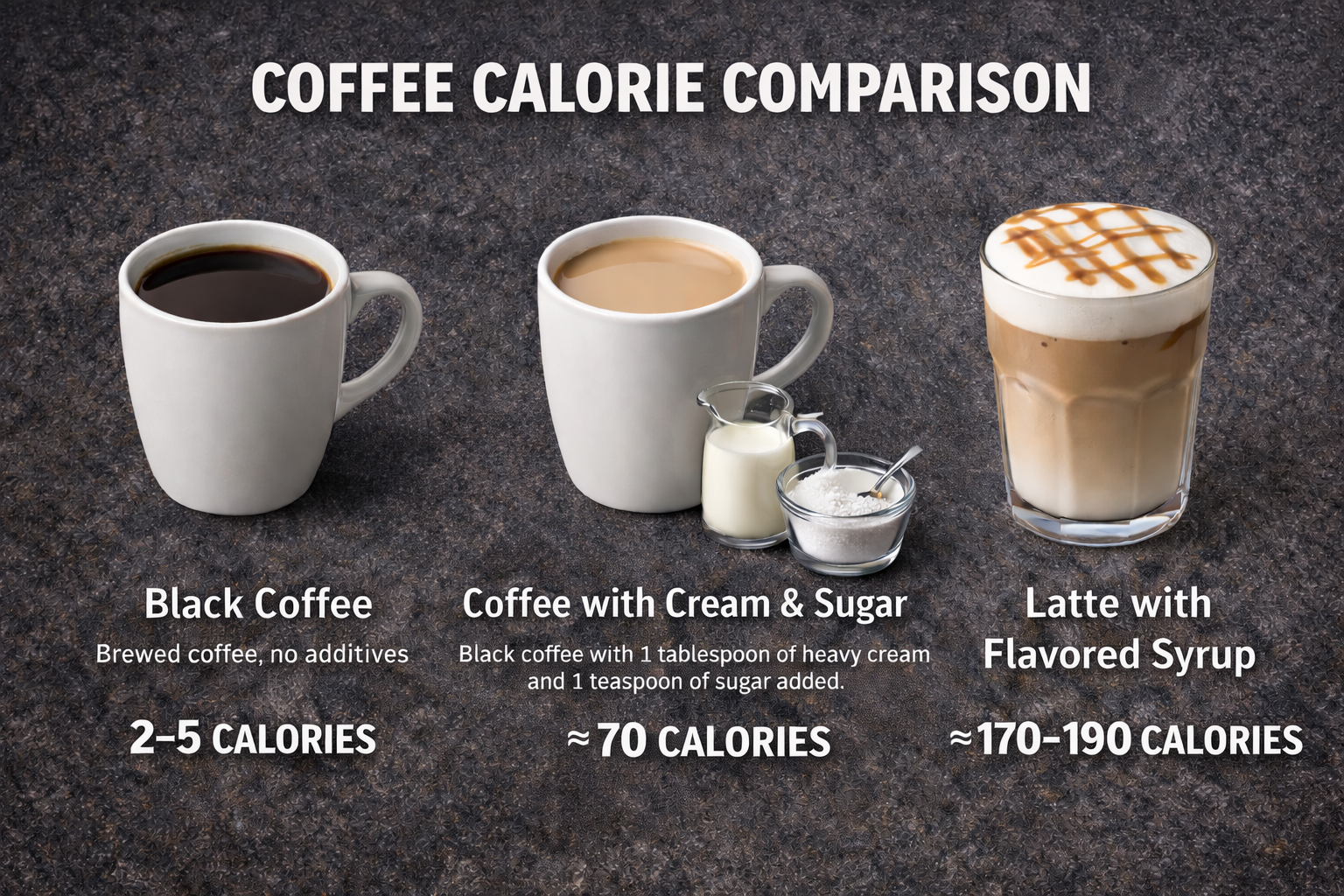
Liquids are one of the most common ways people unintentionally erase their deficit. Many people find liquid calories easier to overconsume than solid food, and sugar-sweetened beverage intake is strongly linked to weight gain over time. [2]
Common culprits:
Cream and sugar in coffee
Fancy lattes
Smoothies that are basically a meal
Juice
Soda
Sports drinks
“Healthy” shakes
Alcohol (we’ll handle that separately)
Practical fixes (pick one):
Keep the coffee ritual, change the inputs: measure creamer/milk for 14 days to recalibrate your eye.
Build smoothies like a meal: protein + fruit + fiber, not a milkshake disguised as “healthy.”
Create beverage rules you can repeat:
“I only drink calories around training.”
“I only drink calories at meals.”
“I only drink calories on weekends.”
Leak #2 — “Healthy Fats” That Are Calorie-Dense by Design
Olive oil, nut butters, nuts, avocado, pesto, tahini, and granola are not “bad foods.” They’re just dense foods.
A small portion can quietly turn into a large portion, especially if you pour or scoop without measuring.
What this looks like:
“I eat salads” (but dressing and toppings turn it into a calorie bomb)
“I snack on nuts” (and snack portions rarely equal one serving)
“I cook healthy” (and oil is used generously)
Practical fixes:
Measure fats for 14 days. Not forever. Just long enough to recalibrate.
Use spray oil for certain cooking situations.
Pick one “fat anchor” per meal:
If you want avocado, keep dressing lighter.
If you want heavy dressing, keep toppings leaner.
Leak #3 — Sauces, Dressings, and “Extras”
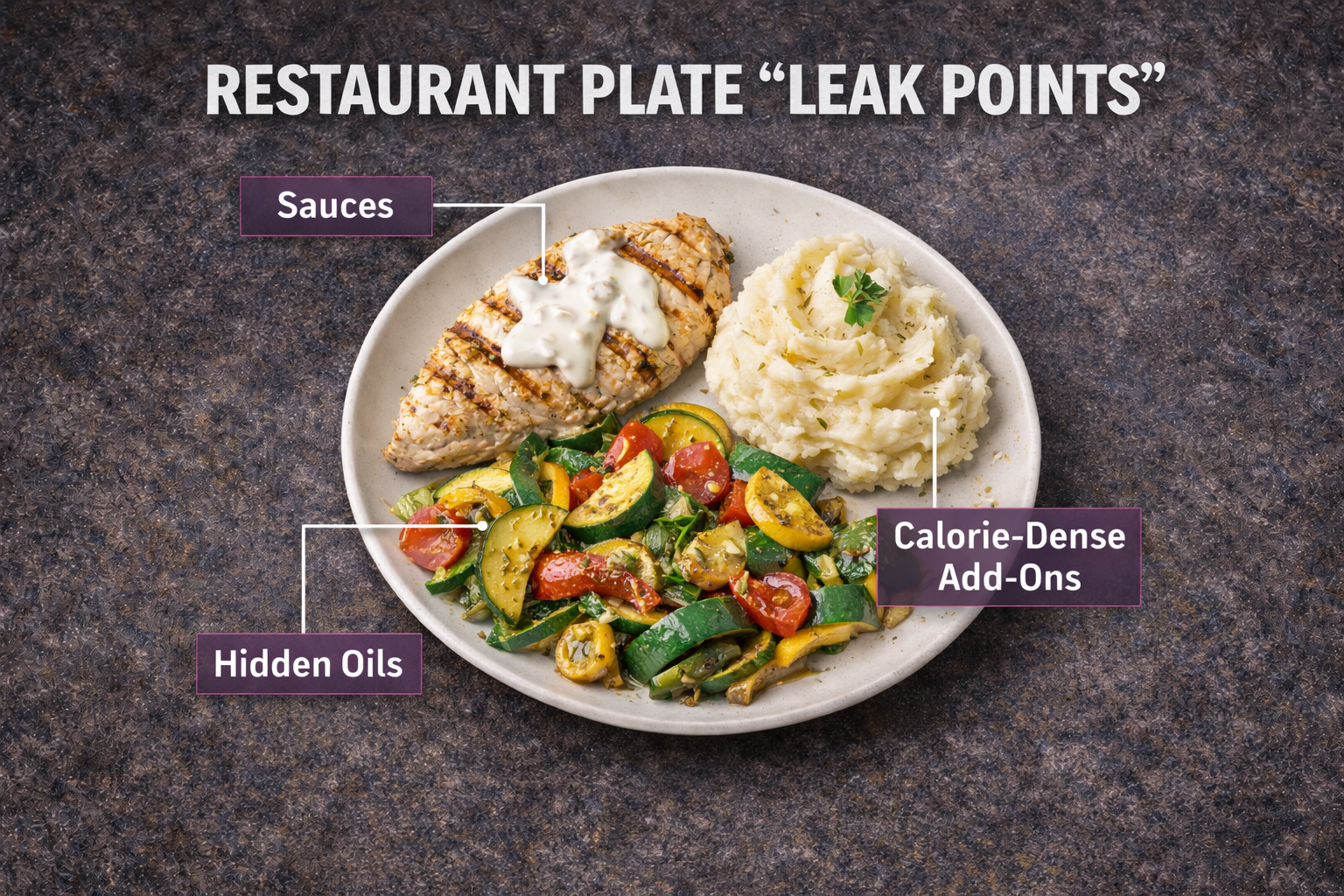
People track chicken, rice, and broccoli… and forget what made the chicken taste good.
High-impact extras:
Ranch, Caesar, mayo-based dressings
Cooking oils and butter
BBQ sauce, teriyaki, honey mustard
Cheese “just a little”
Croutons
“A handful” of chips
Bites while cooking
Practical fixes:
Track condiments for a week and you’ll find your answer fast.
Use the “one sauce rule”: one calorie-dense sauce per meal, measured.
Use high-flavor, low-cal options when you want volume:
salsa
hot sauce
vinegar-based sauces
Greek yogurt-based sauces
Leak #4 — The “Small Bites Don’t Count” Problem
This is one of the most underestimated leaks because it feels harmless.
Examples:
A few bites of your kid’s food
“Just a taste” while cooking
A handful of cereal
A few chips while plating dinner
Finishing someone else’s leftovers
Once is irrelevant. Daily becomes a system.
Practical fixes:
Create a boundary: “No standing calories.”
If you’re hungry, sit down and have a real snack you can track.
Leak #5 — Portion Creep on Foods You Stopped Measuring
Most people start dieting and measure everything, then get comfortable and stop measuring the foods they eat most often.
Portion creep usually shows up in:
rice, pasta, cereal
peanut butter
granola
cheese
oils
“healthy” snacks
Practical fixes:
Re-measure your top 5 most frequent foods once per month.
If progress stalls, re-measure for 7 days. It’s the fastest reset button.
Leak #6 — Restaurant Meals and “Close Enough” Tracking
You can absolutely eat out and lose fat. You just need a strategy.
Restaurant meals are harder to estimate because preparation methods (especially added fats and sauces) vary significantly between restaurants and cooks. This isn’t about paranoia. It’s about reality.
Also note: packaged foods can have rounding conventions on labels, and small per-serving discrepancies can add up if you routinely eat multiple servings. [13]
Practical fixes:
Use the “one restaurant lever”:
skip the drink
or skip the app
or split the entrée
or choose one higher-cal item and make the rest lean
When tracking restaurant meals, use a conservative estimate:
add a buffer (ex: 10–20%) as a practical rule of thumb
Hit protein first at restaurants. It keeps the rest controlled.
Leak #7 — Alcohol: The Fat-Loss Speed Bump
Alcohol is a double hit:
It has calories
It can reduce fat oxidation in the short term and often increases “bonus eating” because inhibition drops
Controlled metabolic research supports alcohol’s “fat-sparing” effect (less fat oxidation for hours after drinking). [10]
Alcohol also tends to come with:
late night food
snacks
bigger restaurant portions
skipped workouts
lower movement the next day
Practical fixes:
Decide your frequency:
0–1 nights per week is often the difference between stuck and progressing
If you drink, set guardrails:
protein-forward dinner first
track drinks honestly
planned stop point
Don’t try to “earn” alcohol by starving all day. That usually backfires.
Leak #8 — The Weekend Gap
Many people run a deficit Monday through Friday and erase it Friday night through Sunday.
This isn’t a discipline issue. It’s a planning issue.
Pick one weekend strategy:
Even deficit all week: slightly tighter weekdays to allow flexibility on weekends
Consistent all week: same structure daily with one planned higher-cal meal
Maintenance weekends: deficit during the week, maintenance on weekends, still progress over time
Consistency beats intensity.
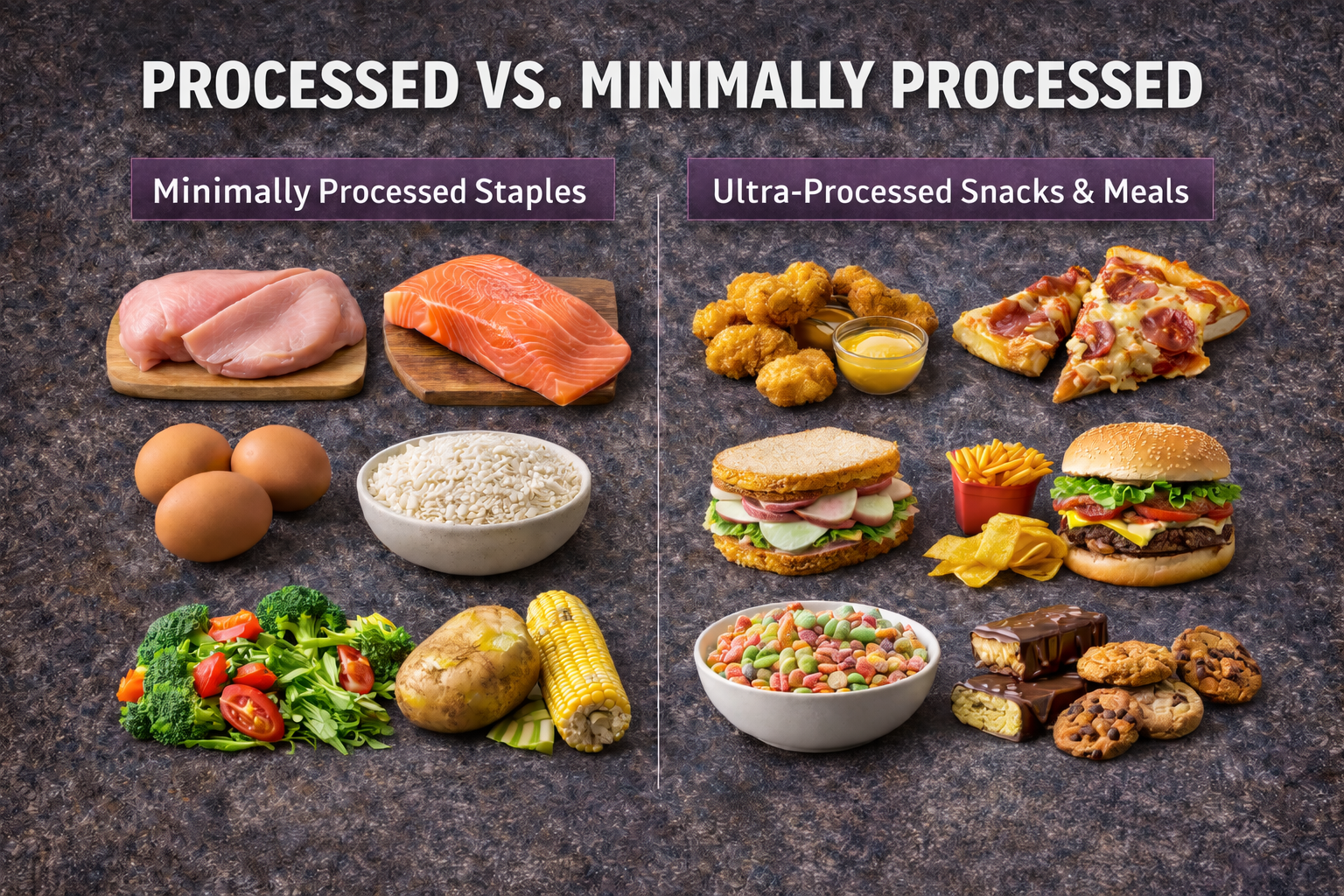
Leak #9 — Ultra-Processed Foods That Are Easy to Overeat
This is not a moral statement. It’s a practical one.
In an inpatient randomized trial, participants ate significantly more calories per day on an ultra-processed diet than on an unprocessed diet, even though meals were designed to be matched for several nutritional factors. [1]
Ultra-processed foods tend to be:
faster to eat
easy to snack on mindlessly
less filling per calorie (for many people)
Practical fixes:
Keep processed foods, but change the ratio:
build the day on minimally processed staples
add processed foods as planned items, not default grazing food
Use “friction”:
don’t store snack foods in visible, easy-access locations
portion snacks into single servings
How to “Eat More” the Right Way (and Still Lose Fat)
Strategy 1 — Lower Your Energy Density Without Lowering Satisfaction
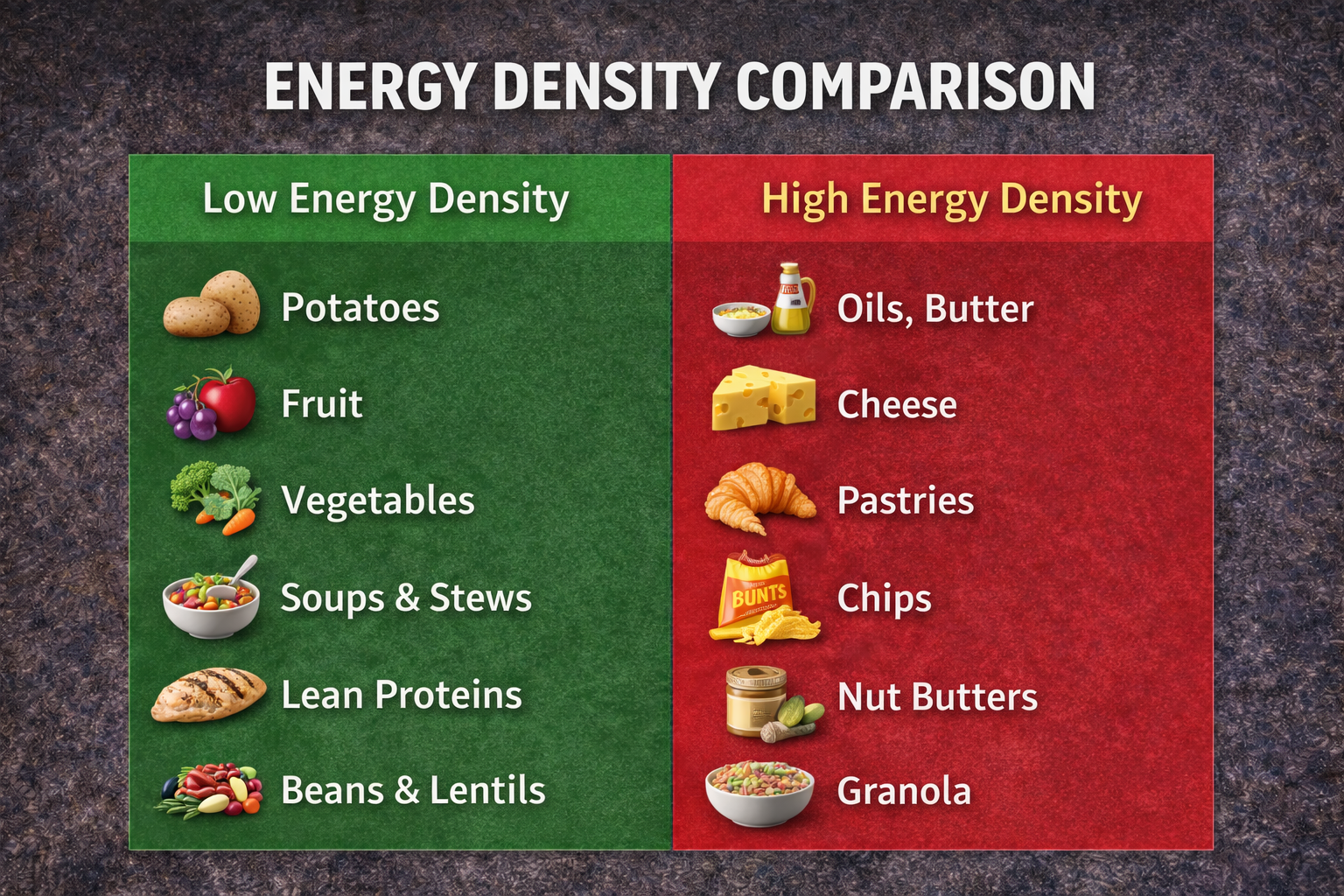
Energy density is calories per gram of food.
Lower energy density usually means you can eat bigger portions for fewer calories, and studies support this approach as useful for weight loss and adherence. [5,6]
High-volume, lower-density foods:
potatoes
fruit
vegetables
soups and stews
lean proteins
beans and lentils (if your digestion tolerates them)
Low-volume, higher-density foods:
oils, butter
cheese
pastries
chips
nut butters
granola
You don’t need to avoid high-density foods. You need to use them intentionally.
Strategy 2 — Increase Protein (Practical Target That Works)
Protein helps dieting in three practical ways:
it tends to improve satiety and appetite control
it supports lean mass retention during weight loss
it has a higher thermic effect than carbs and fat
[7,8]
Practical coaching target (adjust to the person):
Aim for 25–40g protein per meal, across 3–4 meals/day
Or roughly 0.7–1.0g per pound of goal body weight per day for many active adults (individual needs vary)
High-protein staples:
lean meat, poultry, fish
eggs and egg whites
Greek yogurt, cottage cheese
whey or casein
tofu, tempeh
Strategy 3 — Increase Fiber (Build Meals That Actually Fill You Up)
Higher-fiber eating patterns tend to improve satiety and can help reduce overall intake for many people, though results vary by fiber type and the person. [9]
Simple goal:
Work toward 25–35g fiber per day by building meals around:
fruits
vegetables
beans and lentils
whole grains you tolerate
measured high-fiber cereals
Increase fiber gradually and drink enough water.
Strategy 4 — Build Meals the Iron Camp Way (The Plate Method)
Most meals should include:
Protein anchor (25–40g)
High-volume produce (at least two fists worth)
Carb you control (especially around training)
Fat you measure (especially oils and nut butters)
Examples
Breakfast (high volume):
Greek yogurt + berries + measured granola + fruit
eggs + egg whites + potatoes + fruit
Lunch:
big bowl: chicken + rice/potatoes (measured) + lots of vegetables + salsa
Dinner:
lean protein + big veggie portion + carb portion + measured fat
Snack (tracked):
protein shake + fruit
cottage cheese + fruit
yogurt + berries
This is how you “eat more” while staying in a deficit.
The Other Half of the Equation (Your Burn Rate Matters)
NEAT — The Invisible Calorie Burn You Forget to Protect
NEAT is non-exercise activity thermogenesis: energy burned through daily movement outside formal exercise. Research shows NEAT can vary drastically between individuals and can meaningfully influence weight change over time. [3,4]
Dieting can reduce NEAT because people subconsciously move less.
Practical fixes:
Pick a step target you can own:
start with your average
add 1,000–2,000 steps/day
keep it consistent
Protect movement on diet days, especially when training hard.

Strength Training Is the Multiplier
If your goal is fat loss and you want to look athletic, strength training matters.
Resistance training helps preserve lean mass during dieting, and combined with higher protein intake, supports better body composition outcomes. [7]
Cardio is optional. Movement is not.
A Practical “Calorie Leak Audit” You Can Run This Week
You don’t need to fix everything. You need to find your top 2–3 leaks.
Step 1 — Track Honestly for 7 Days
Not forever. Just seven.
Track:
oils
dressings
drinks
snacks
bites and tastes
alcohol
weekend meals
If you hate tracking, take photos of everything you consume for seven days. Awareness first. Precision second.
Step 2 — Choose Your “Big Three” Fixes
Pick three:
measure oils/nut butters
cap alcohol nights
remove liquid calories most days
replace ultra-processed snacks with planned snacks
add 2,000 steps/day
build protein anchors into 3 meals/day
Step 3 — Increase Food Volume on Purpose
This is the “eat more” part.
Add one high-volume addition daily:
extra vegetables at lunch and dinner
fruit at breakfast and as a snack
potatoes or rice portion that supports training, measured
soup or salad starter before dinner
Step 4 — Re-Check Progress Using the Right Data
Use at least two metrics:
7-day average scale weight
waist measurement
progress photos
training performance
hunger and energy
Fat loss is rarely linear. Your habits should be.
Common Scenarios (and What to Do)
“I’m eating clean but not losing”
Most likely leaks:
oils, nuts, nut butters
snacks you don’t track
restaurant meals
weekend gap
Fix:
measure fats for 14 days
keep meals simple during the week
plan one higher-cal meal, not a higher-cal weekend
“I’m in the gym a lot, but nothing changes”
Most likely leaks:
NEAT drops because training fatigue increases
appetite rises and intake creeps up
liquid calories post-workout
Fix:
step target
protein anchor meals
track post-training intake for 7 days
“I eat small portions but still can’t lose”
Most likely issue:
small portions of very dense foods
grazing
alcohol
inconsistent weekends
Fix:
swap in low energy density meals
track for a week and identify the pattern
What an “Eat More, Lose Fat” Day Can Look Like
This is an example structure. Adjust based on your training, calories, and preferences.
Meal 1
Greek yogurt
berries
measured granola
extra fruit
Meal 2
chicken bowl
rice or potatoes (measured)
huge veggie portion
salsa or yogurt-based sauce
Snack
protein shake
banana or apple
Meal 3
lean protein
big salad or cooked veggies
carb portion if training day
measured fat (olive oil or avocado)
This is often more food volume than the “tiny meals” approach, with fewer hidden calories.
The Iron Camp Bottom Line
Fat loss isn’t magic. It’s math plus behavior.
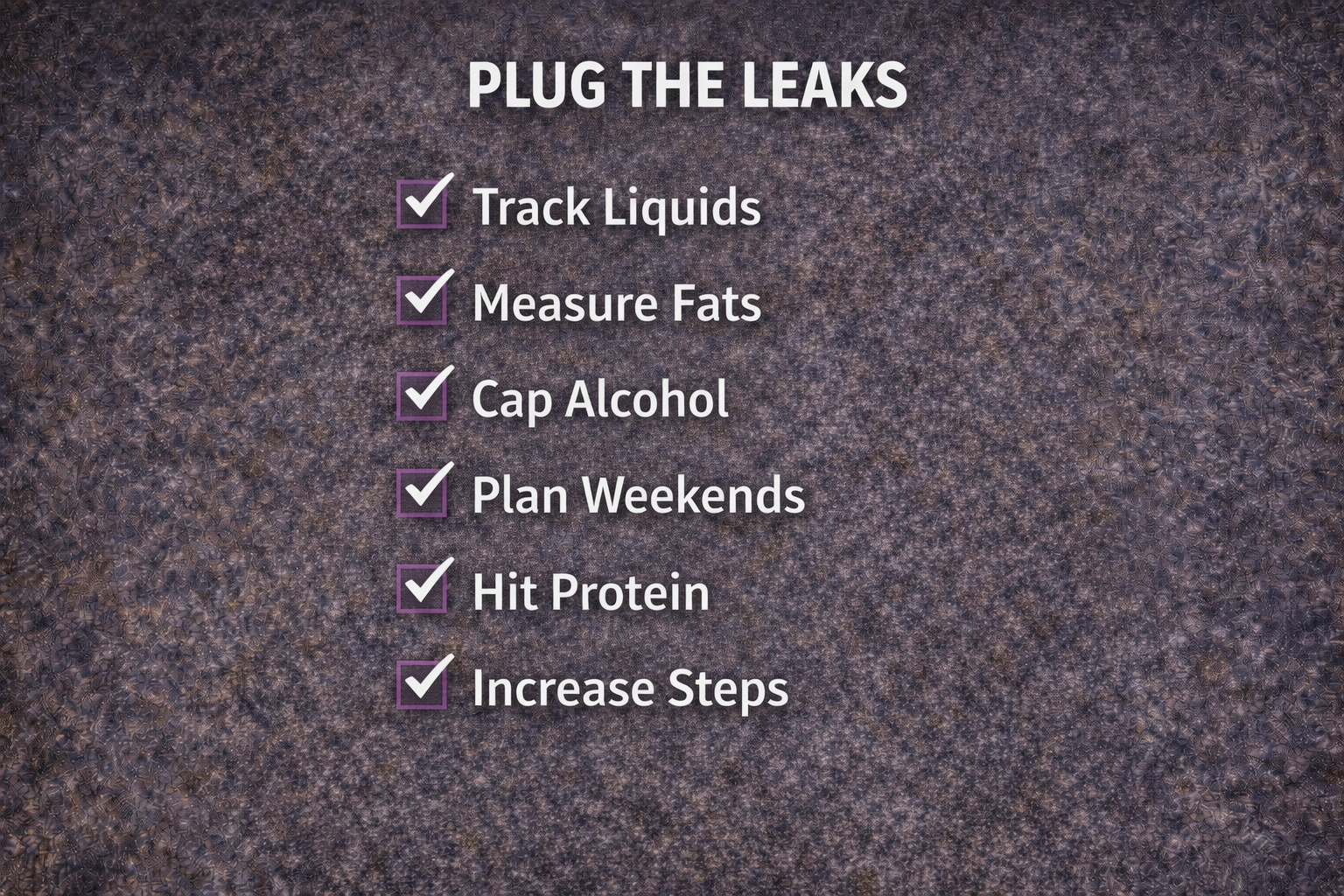
If you feel like you should be losing fat but you aren’t, don’t immediately cut calories harder. Run the leak audit first.
Plug the leaks, then push volume in the right direction:
more protein
more fiber
more low energy density foods
more steps
fewer liquid calories and untracked extras
You’ll eat more food, feel more satisfied, and still move toward leaner body composition.
FAQ
Can I really eat more and lose fat?
Yes, if “more” means more food volume and better structure while keeping total weekly calories in a deficit. Lower energy density patterns can support weight loss outcomes. [5,6]
Do I have to track forever?
No. Many people only need tracking as a temporary calibration tool. If you stall, a 7–14 day reset is often the fastest way to find the leak.
Are carbs the problem?
Usually not. The issue is uncontrolled intake, calorie-dense add-ons, and inconsistent weekends. Carbs can fit, especially around training, when portions are measured and meals are structured.
Is it all calories in, calories out?
Energy balance matters, but the easiest way to sustain a deficit depends heavily on food choice, satiety, sleep, movement, and environment. Ultra-processed diets can increase calorie intake even when several nutritional factors are designed to be matched. [1]
References
Hall KD, et al. Ultra-Processed Diets Cause Excess Calorie Intake and Weight Gain: An Inpatient Randomized Controlled Trial. Cell Metabolism. (PubMed: 31105044). https://pubmed.ncbi.nlm.nih.gov/31105044/
Malik VS, et al. Sugar-sweetened beverages and weight gain: systematic review and meta-analysis. Am J Clin Nutr. (2013). https://pubmed.ncbi.nlm.nih.gov/23676483/
Levine JA, et al. Role of nonexercise activity thermogenesis in resistance to fat gain with overfeeding. Science. (1999). https://pubmed.ncbi.nlm.nih.gov/9880251/
Levine JA. Non-exercise activity thermogenesis (NEAT). Best Pract Res Clin Endocrinol Metab. (2002). https://pubmed.ncbi.nlm.nih.gov/12468415/
Rolls BJ, et al. The role of energy density in weight management. https://pubmed.ncbi.nlm.nih.gov/15976148/
Ledikwe JH, et al. Reductions in dietary energy density are associated with weight loss outcomes. https://pubmed.ncbi.nlm.nih.gov/17490955/
Moon J, et al. Clinical Evidence and Mechanisms of High-Protein Diets for Weight Loss and Maintenance. (2020). https://pmc.ncbi.nlm.nih.gov/articles/PMC7539343/
Guarneiri LL, et al. Protein amount/type and diet-induced thermogenesis: systematic review/meta-analysis. (2024). https://advances.nutrition.org/article/S2161-8313(24)000166-2/fulltext
Clark MJ, Slavin JL. The effect of fiber on satiety and food intake: systematic review. (2013). https://pubmed.ncbi.nlm.nih.gov/23885994/
Sonko BJ, et al. Effect of alcohol on postmeal fat storage. Am J Clin Nutr. (1994). https://pubmed.ncbi.nlm.nih.gov/8116538/
Trabulsi J, Schoeller DA. Evaluation of dietary assessment instruments against doubly labeled water. (2001). https://pubmed.ncbi.nlm.nih.gov/11595643/
Burrows TL, et al. Validity of dietary assessment methods vs doubly labeled water: systematic review. (2019). https://www.frontiersin.org/journals/endocrinology/articles/10.3389/fendo.2019.00850/full
eCFR. 21 CFR 101.9 Nutrition labeling of food. https://www.ecfr.gov/current/title-21/chapter-I/subchapter-B/part-101/subpart-A/section-101.9
