Only 12 Weeks to Transform Your Body for the Rest of Your Life
Read time: 8 minutes

12 weeks can create visible, meaningful physique change and help build habits that support long-term results.
Twelve weeks is one of the most popular timelines in fitness for a reason.
It is long enough to create real progress.
It is short enough to stay focused.
And if you use it the right way, it can be enough time to change not just how your body looks, but how you live going forward.
Let’s get one thing straight though.
This is not a sales gimmick.
This is not about starving yourself, doing endless cardio, or trying to crash your way into a new body in 84 days.
The idea is simpler than that.
Twelve weeks of consistent nutrition tracking and at least three strength training sessions per week can absolutely create a visible, meaningful improvement in physique. More importantly, those same 12 weeks can teach you the habits that keep the progress going long after the initial phase is over.
That is the real transformation.
Not just looking different in 12 weeks.
Becoming the type of person who no longer has to keep starting over.
Research supports the main pieces here. Regular resistance training improves strength, lean mass, and body composition. Adults are recommended to perform muscle-strengthening exercise at least two days per week, and three days per week is often a strong, realistic setup for consistent progress. Nutrition self-monitoring is also one of the most effective behavior-change tools for improving body composition and weight-loss outcomes. Protein intake matters too, especially when someone is trying to build or preserve muscle while improving body composition [1,2,8,11].
Why 12 Weeks Is Enough Time to Matter
Most people do not fail because they picked the wrong supplement or the wrong split.
They fail because they never stay with the basics long enough.
They go hard for a week.
They eat “clean” without tracking.
They train hard on Monday, miss Thursday, and start over the next week.
They rely on motivation instead of structure.
Twelve weeks works because it is long enough to create momentum and short enough to stay locked in.
If you train three times per week for 12 weeks, that gives you around 36 lifting sessions. That is enough time to get better at the lifts, build confidence, improve work capacity, and create a better training stimulus. Research on resistance training and body composition consistently shows that meaningful change can happen over 8 to 12 weeks, especially in beginners, deconditioned lifters, or people returning to proper structure [5,6,7].
Twelve weeks is also enough time to stop guessing with food.
You learn what your intake really looks like.
You learn where your calories creep up.
You learn whether your protein is actually high enough.
You learn how often weekends ruin a good five-day stretch.
That is why tracking matters.
Not because it is obsessive.
Because it gives you honest feedback.
Studies on self-monitoring show that people who consistently monitor food intake, activity, and body weight tend to achieve better outcomes than people who do not [8,9,10].
That alone makes a 12-week block powerful.
Because once you stop guessing, you can finally adjust with purpose.
The Real Goal Is Bigger Than the 12 Weeks
A lot of transformation messaging gets this wrong.
It treats the end of the 12 weeks like the finish line.
It is not.
The end of the 12 weeks should be the start of a new standard.
A short-term physique goal can be useful, but the bigger win is building habits that last. If someone spends 12 weeks strength training consistently, hitting protein more often, managing calories better, and learning how their body responds, they are doing more than changing their appearance.
They are building a new identity.
They become someone who trains.
Someone who pays attention.
Someone who understands nutrition instead of fearing it.
Someone who knows that consistency beats intensity.
That is where the “for the rest of your life” part comes in.
Not because 12 weeks solves everything forever.
Because 12 weeks can finally teach you how to stop quitting.
What Can Actually Change in 12 Weeks
The amount of visible change will depend on the person. Training age, starting body composition, sleep, stress, recovery, and consistency all matter.
But if the plan is done well, 12 weeks is enough time to improve several important areas.
1. Strength
One of the fastest improvements most people notice is strength.
Beginners and people returning from inconsistency often gain strength quickly because they improve coordination, exercise skill, and tolerance to training. Resistance training interventions lasting 8 to 12 weeks routinely show meaningful strength improvements [1,2,6].
Strength matters for physique too.
The stronger you get, the more productive your training can become.
The more productive your training becomes, the easier it is to build or retain muscle.
2. Lean mass or lean mass retention
If someone is new to lifting or returning after a break, it is realistic to improve lean mass over a 12-week period.
If they are in a calorie deficit, the goal may be more about preserving muscle while losing fat rather than adding a large amount of new muscle. That still matters. Resistance training is one of the best tools for improving body composition, especially compared to dieting alone. Protein intake helps support that process even more [5,11,12,13].
3. Fat loss and visual physique change
For most people, the biggest visual change comes from improving nutrition.
That is why this is not just about training hard.
It is about training while tracking food honestly.
A lot of stalled fat loss comes down to inaccurate intake. Extra bites, snacks, drinks, loose weekends, and poor protein intake add up quickly. Self-monitoring helps expose those patterns, and when paired with training, it becomes much easier to create real momentum [8,10,14].
4. Better adherence
This may be the most underrated result.
By week 10 or 12, many people are no longer negotiating with themselves every day. Training feels more normal. Tracking feels less annoying. The structure becomes part of the routine.
That matters because the beginning is usually the hardest part.
Once the habit is established, the friction drops.
Why 3 Strength Training Days Per Week Is Enough for Most People
A lot of people assume they need to train five or six days per week to see major progress.
Usually, they do not.
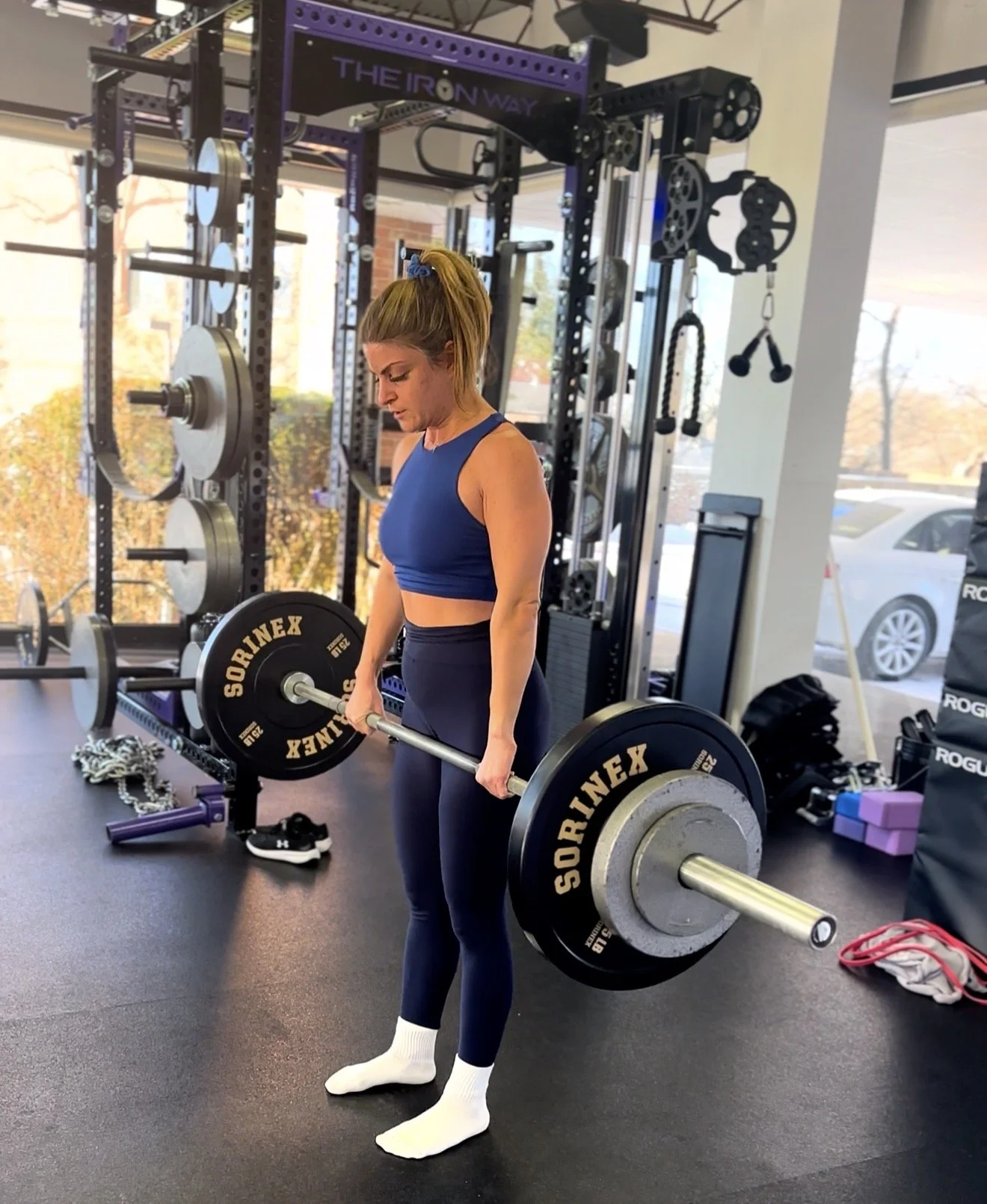
Three strength training sessions per week is a strong minimum for a lot of adults because it balances progress with real life. It is enough frequency to improve strength and body composition, but still manageable around work, family, and recovery.
Guidelines recommend adults perform muscle-strengthening work at least two days per week. Research also suggests that weekly training volume matters more than simply cranking frequency higher, which means a well-structured three-day plan can absolutely produce great results [1,2,3,4].
That is why consistency matters more than having the “perfect” split.
A good three-day plan can cover:
knee-dominant work
hip-dominant work
pushing
pulling
single-leg work
core work
That is enough to create a different body when done consistently.
Why Nutrition Tracking Is Important
Most people think they are eating better than they actually are.
That is not an insult.
It is just reality.
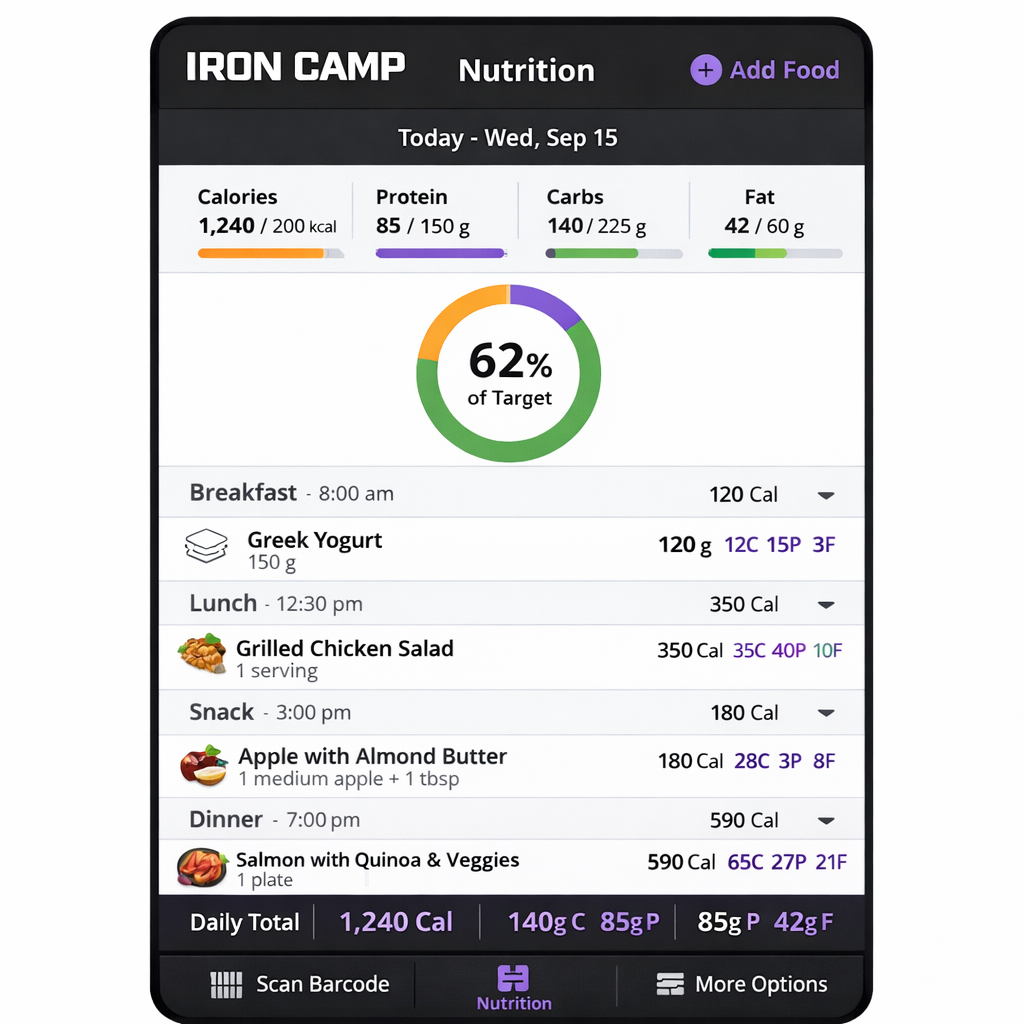
Without tracking, nutrition becomes a story we tell ourselves.
With tracking, it becomes data.
That data helps answer the questions that matter:
Are you eating enough protein?
Are your calories aligned with your goal?
Are you underestimating portions?
Are weekends erasing your weekly progress?
Are you rewarding workouts with food that cancels out the deficit?
Self-monitoring has been a cornerstone of successful weight-loss interventions for years because it forces awareness. And awareness creates better decision-making [8,9,10].
This does not mean someone has to track forever.
But tracking for 12 weeks can permanently improve how they understand food, portions, protein, and consistency.
That is one of the biggest reasons a 12-week phase can carry over into long-term success.
Protein Still Matters
Protein is not magic, but it does matter a lot in a physique-focused plan.
If someone is strength training regularly, protein helps support muscle retention, recovery, satiety, and muscle-building potential. The International Society of Sports Nutrition recommends that active individuals often benefit from roughly 1.4 to 2.0 g/kg/day, with higher intakes sometimes useful during calorie restriction [11].
Meta-analyses also support the idea that higher protein intake, especially when combined with resistance training, can help improve lean mass outcomes [12,13].
This matters because one of the biggest mistakes people make during a body transformation phase is under-eating protein while trying to lose fat.
That often leads to worse training, worse recovery, more hunger, and a flatter-looking physique.
What This Is Not
This is not a promise that everyone will completely reinvent their body in 12 weeks.
It is not a claim that the scale will move dramatically for everyone.
It is not a push for extremes.
It is not a shortcut.
It is a realistic argument that 12 weeks is enough time to:
build structure
improve body composition
gain strength
learn nutrition
create visible progress
stop living in the cycle of starting over
And that matters more than any flashy before-and-after promise.
A lot of people also need to hear this: scale weight is not the whole story. Someone can gain strength, improve body composition, retain more lean mass, and look noticeably better without seeing the scale crash [5,6,7].
That is why photos, waist measurements, training performance, and how clothes fit all matter too.

Final Thoughts
You do not need forever to make progress that changes your life.
You need a focused stretch of time where the right habits are repeated long enough to actually work.
Twelve weeks can do that.
Not because it is a magic number.
Because it is long enough to stop dabbling.
Long enough to get stronger.
Long enough to learn your nutrition.
Long enough to improve your physique.
Long enough to build momentum.
Long enough to create proof that your body is not stuck.
That proof changes things.
Once you see what happens when you actually train consistently, track your food honestly, and stay with the basics, you stop looking for shortcuts.
You start trusting the process.
That is the real transformation.
A better-looking body is part of it.
A better system is what makes it last.
So no, 12 weeks is not a gimmick.
It is enough time to build habits strong enough to change your body now and improve the way you live going forward.
References
[1] Centers for Disease Control and Prevention. Physical Activity Guidelines for Adults. Adults should perform muscle-strengthening activities on 2 or more days per week.
[2] Bull FC, Al-Ansari SS, Biddle S, et al. World Health Organization 2020 guidelines on physical activity and sedentary behaviour. Br J Sports Med. 2020;54(24):1451-1462.
[3] Schoenfeld BJ, Grgic J, Krieger J. How many times per week should a muscle be trained to maximize muscle hypertrophy? A systematic review and meta-analysis. J Sports Sci. 2019;37(11):1286-1295.
[4] Schoenfeld BJ, Ogborn D, Krieger JW. Effects of resistance training frequency on measures of muscle hypertrophy: a systematic review and meta-analysis. Sports Med. 2016;46(11):1689-1697.
[5] Lopez P, Taaffe DR, Galvão DA, et al. Resistance training effectiveness on body composition and body weight outcomes in individuals with overweight and obesity across the lifespan: a systematic review and meta-analysis. Obes Rev. 2022;23(5):e13428.
[6] Seo J, Hyun J, Kim J, et al. Effects of 12 weeks of resistance training on body composition and physical function in obese older women. Int J Environ Res Public Health. 2024.
[7] Kapsis DP, Tsoukos A, Bogdanis GC, et al. Changes in body composition and strength after 12 weeks of high-intensity functional training. Sports. 2022;10(2):17.
[8] Burke LE, Wang J, Sevick MA. Self-monitoring in weight loss: a systematic review of the literature. J Am Diet Assoc. 2011;111(1):92-102.
[9] Krukowski RA, Ross KM, Quesnel KJ, et al. Impact of feedback generation and presentation on self-monitoring in weight loss interventions: systematic review. Obes Rev. 2024.
[10] Burke LE, Conroy MB, Sereika SM, et al. Adherence to self-monitoring and behavioral goals is associated with greater odds of achieving clinically meaningful weight loss. Obesity. 2025.
[11] Jäger R, Kerksick CM, Campbell BI, et al. International Society of Sports Nutrition position stand: protein and exercise. J Int Soc Sports Nutr. 2017;14:20.
[12] Nunes EA, Colenso-Semple L, McKellar SR, et al. Systematic review and meta-analysis of protein intake and lean body mass/strength outcomes in adults engaged in resistance exercise. Br J Sports Med. 2022.
[13] Vieira AF, Costa RR, Macedo RCO, et al. Effects of protein supplementation associated with resistance training on body composition and strength. Nutrients. 2022;14(12):2527.
[14] Recchia F, Candeloro P, et al. Dose-response effects of exercise and caloric restriction on visceral adipose tissue in overweight and obese adults: a systematic review and meta-analysis. Br J Sports Med. 2023.
